American Flyer

Andy Hampsten and the Passo di Gavia

A cyclist pedals up the Passo di Gavia in the Italian Alps with snow still on the hills.
The Passo di Gavia

American Flyers

In 1985, 23 year-old American cyclist Andy Hampsten won stage 20 of the Giro d’Italia. He was riding with Jim Ochowitz’s 7-Eleven team, which had both turned professional and relocated to Europe that year. The line-up included 1984 Los Angeles Olympic Gold Medalists Alexi Grewal and Eric Heiden. 

7-Eleven featured as an amateur outfit in the 1985 movie, American Flyers, starring Kevin Costner. However, Hollywood fiction was about to pale in comparison to the epic drama that was set to put the team, and Andy Hampsten in particular, into the annals of road cycling legends.

Team 7-Eleven

In 1985, Team 7-Eleven received a wildcard team invitation to the Giro d’Italia, one of the three Grand Tours. It was the chance of a lifetime for the fledgling American team and one that Ochowitz was not about to let slip through his fingers. So he assembled a team and added Andy Hampsten to the roster. At that time Hampsten was already racing in Europe with Levi’s-Raleigh SRC, an American amateur team. Hampsten was given a 30-day contract on loan from Levi’s-Raleigh SRC. This was a move that would make his career: after his teammate, Ron Kiefel, won stage 15 of the Giro d’Italia, making him the first American ever to win a stage in a Grand Tour, Hampsten won stage 20.

For a wild card team, this performance exceeded expectations and earned 7-Eleven an invitation to the Tour de France in 1986. Additionally, the wins boosted the team’s profile and put them on a trajectory to become a major player in professional road racing for the next decade. 

La Vie Claire, Greg Lemond and Bernard Hinault

Andy Hampsten’s course was set for a different route. Following his Stage 20 win in the Giro d”Italia Bernard Hinault’s La Vie Claire team signed him up. It was here, in 1986, that Hampsten teamed up with fellow American maverick rider Greg Lemond, who was soon to become a legend in his own right. That year Lemond won the Tour de France in an epic and contentious battle with his teammate Bernard Hinault, making him the first American and first non-European to win a Grand Tour. Despite Hinault’s chagrin at losing the Tour to his teammate, the team did spectacularly well with Andy Hampsten finishing in fourth place overall and winning the Young Rider Classification. Swiss rider Niki Rüttimann also placed in seventh overall for La Vie Claire. 

Andy Hampsten was proving himself on the world stage of professional road cycling and building a reputation as a strong and fearless rider. After the 1986 Tour de France Hampsten again joined the 7-Eleven team, this time on a full contract. He stayed with the team for the next five years and sealed his reputation during the 1988 Giro d’Italia.


The 1988 Giro d’Italia – the Corsa Rosa

The stage is set

With a panoramic view of the Northern Apenine mountains around them, twenty teams (180 riders) lined up on the start line in front of the Ducal Palace in Urbino for the 1988 Giro d’Italia. 1987 Giro winner, the Irishman Stephen Roche, was not present due to a knee injury so the overall classification was up for grabs. The main protagonists were Andy Hampsten; Swiss cyclist, Urs Zimmerman; Dutch rider, Erik Breukink; the Italian, Franco Chiocciolli, who would go on to win the Giro in 1991, and the Spaniard Pedro Delgado who had won the Vuelta a España in 1985 and would go on to win the Tour de France in 1988.

The route

Unusually by today’s standards of Grand Tours, the 1988 edition of the Giro d’Italia contained four time trials. One of these was a team time trial, another a climbing time trial up to Valico del Vetriolo, and a third was held on the final day. The race featured thirty categorised climbs. 

Four of these climbs were summit finishes: Stage 6 – Campitello Matese; Stage 12 – Selvino; Stage 13 – Chiesa; Stage 15 – Merano 2000. 

There were no rest days and on each of two days there were two stages; stages 4a and 4b -a 123 km road stage followed by a 40 km team time trial – and the final stage with a 73 km road stage and a 43 km individual time trial. 

Time trials and split stages – the early stages

Frenchman Jean François Bernard took the first Maglia Rosa with a time trial win on a 9 km course. He kept the jersey until stage 4a when Massimo Podenzana got in a breakaway and won the stage. The win and the time bonus gave Podenzana enough of an advantage to take the Maglia Rosa. He held onto the jersey until stage 12. 

A Eurocentric peloton

Of the 180 riders competing in the 1988 Giro d’Italia, 98 were Italian and the rest were made up from other nations, mainly within the traditional heartland of professional road racing. The 1980s were changing days inside the peloton: with Greg Lemond winning the Tour de France in 1986 and Stephen Roche winning the Giro d’Italia in 1987, continental Europeans could see their traditions and beloved races being eroded by incomers. There was a pervasive xenophobia among some in the cycling peloton and fanbase who did not like foreigners taking over their races. Winning stages was tolerated, but winning races overall was just taking it all a step too far. 

This attitude made it all the more impressive that riders such as Roche, Lemond and Hampsten could face down other teams’ combined forces against them and still come out on top. It was this atmosphere that Hampsten faced as he aimed for victory in the Giro in 1988.

Environmental protests

Road cycling has always been a focus for protesters. The link between the newspapers and Grand Tour race organisation means that disruption of these events has always assured national and international media coverage of issues facing communities.

Stage 11 of the Giro d’Italia was annulled as local people protested in the final mile, blocking the race route. These protesters were trying to raise awareness of chemical manufacturer Montedison which, they claimed, was polluting the Bormida River.

The signed picture of Andy Hampsten in the Rifugio Bonetta on the summit of the Passo di Gavia in the Italian Alps.
Signed picture of Andy Hampsten in the Rifugio Bonetta on the summit of the Passo di Gavia

Stage 14 – The Passo di Gavia

5th June 1988 Chiesa in Valmaenco to Bormio (120 km)

The Gavia is a beautiful climb, surrounded by towering peaks, reflected in the crystal waters of Lago Bianco at the summit. It was not so on 13 June 1988.

The Passo di Gavia was first used in the Giro d’Italia in 1960 and it had been causing occasional mischief in the race ever since. However, it was in 1988 that it rose to become an iconic arena of professional cycling. It was one of those moments where the television images and photographs captured the brutality of professional road racing and the disregard nature has for humanity.

Many of the riders on that day’s stage will tell you that it was one of the hardest stages in the history of pro cycling. The Passo di Gavia is a hard climb, but in the valley it was clear that the weather was going to make this day even harder. There was some confusion as to whether the stage would be cancelled. Team directors met as, with freezing rain falling in the valley, it was clear that the summits would have snow. 

Since the upper sections of the Passo di Gavia at that time were unpaved, this would make conditions that much worse. Andy, however, was used to tough conditions as he spent his off-season training on unpaved roads in the mountains around Boulder, Colorado. He therefore knew that other riders were underestimating the severity of the challenge that faced them. 

7-Eleven team manager, Jim Ochowicz, was also thinking ahead. Hampsten was within grasp of the Maglia Rosa just 1 minute 18 seconds behind race leader Franco Chioccioli. Ochowicz was not going to let the chance for a podium spot, or perhaps even an overall victory for his rider slip away but he was not just going to rely on his rider’s resilience and experience of riding in extreme conditions.

The night before stage 14, Ochowicz went to the local ski shop and bought up their stock of winter gloves and issued them to the team. He informed the team of the strategy of driving to the summit of the Gavia, ahead of the race and positioning themselves ready to hand out bottles of hot tea, hats and jackets. He described his journey to the summit as taking forever as they had to negotiate several small avalanches. Mike Neel, the team directeur-sportif insisted that the team cover their entire bodies in lanolin. Andy Hampsten said it was “like we were preparing to swim in the English Channel”.

The stage started with a breakaway of nine riders including Johan Van Der Velde. Hampsten said of the early part of that day: “I’m frozen. It’s just bucketing sleet at the top. It’s as bad as it can be. We’re going along the valley and I’m just thinking ‘Poor me, poor me!’ Then I look around. I see Chioccioli and he has the leader’s jersey and just a rain jacket. He looks like he’s seen a ghost. I mean he’s just dead!”

A team-mate of Hampsten, Dag Otto Lauritzen added: “The Gavia was the coldest day of my life. Normally I like tough weather. I always have been quite strong in extreme weather because a lot of riders are beaten before the start. I also remember that I had never been so cold! We were working very hard at the bottom of the [Gavia]. It’s raining and getting slushy and we are keeping a good pace. Then the road turns to dirt or gravel. And after a while Andy had to leave us.”

Hampsten made three hard attacks when the road turned to dirt and opened up a gap. As he neared the summit he saw the chalk board stating he had a 47 second lead over Erik Breukink. He got his team car alongside him and took a musette bag with hot tea and warm clothing inside. When he put on his wool cap he said, “this snowball rolls down my back off my hair. I’m not even melting snow on my head I’m that cold!”

Lauritzen again, “I didn’t know if I was braking. I had to look at the brakes to make sure my fingers were working because I had no feeling in them anymore.”

Hampsten was the third rider over the top, but it didn’t matter. He was looking good and had time on his closest rivals. Breukink caught up with Hampsten, but Hampsten used this to his advantage by following the Dutch rider on the descent. By this time it was only the two of them out in front and Hampsten knew he didn’t need to win the stage, only stick with Breukink and the Maglia Rosa would be his. 

Despite all the clothing Hampsten had, his legs were still bare. He had ice forming on his shins. He concentrated on surviving, not crashing and sticking with Breukink. 

Breukink took seven seconds from Hampsten to win the stage in Bormio. 

Hampsten said, “I go to the team car really quickly, and the team got my clothes off … Mike leaves the car running and I’m just shaking and crying, ‘What do I do?’ … I don’t’ know if it’s shock. I’m crying, drinking tea. Mike comes to talk to me, and I talk back and nothing comes out that’s intelligible. Then I realise I have the pink jersey and it’s like, ‘Oh God, I have the pink jersey!’ That was our whole motivation.”

The final time trial saw Hampsten lose a further 20 seconds to Breukink, but it was not enough to prevent him from becoming the first American to win the Giro d’Italia. 

Giro d’Italia Stage 14 results:

  1. Erik Breukink: 3 hr 53 min 12 sec
  2. Andrew Hampsten @ 7 sec
  3. Roberto Tomasini @ 4 min 39 sec
  4. Flavio Giupponi @ 4 min 55 sec
  5. Marco Giovannetti @ 4 min 58 sec
  6. Urs Zimmermann @ 5 min 2 sec
  7. Franco Chioccioli @ 5 min 4 sec
  8. Peter Winnen @ 5 min 14 sec
  9. Sergio Finazzi @ 7 min 4 sec
  10. Pedro Delgado @ 7 min 8 sec

Giro d’Italia general classification after Stage 14:

  1. Andrew Hampsten: 68 hr 26 min 7 sec
  2. Erik Breukink @ 15 sec
  3. Franco Chioccioli @ 3 min 54 sec
  4. Urs Zimmermann @ 4 min 25 sec
  5. Flavio Giupponi @ 4 min 55 sec
  6. Marco Giovannetti @ 6 min 55 sec
  7. Peter Winnen @ 8 min 23 sec
  8. Roberto Tomasini @ 8 min 48 sec
  9. Jean-François Bernard @ 9 min 37 sec
  10. Beat Breu @ 10 min 19 sec

1988 Giro d’Italia complete final general classification:

  1. Andrew Hampsten (7-Eleven) 97 hr 18 min 56 sec
  2. Erik Breukink (Panasonic) @ 1 min 43 sec
  3. Urs Zimmermann (Carrera) 2 min 45 sec
  4. Flavio Giupponi (Del Tongo) @ 6 min 56 sec
  5. Franco Chioccioli (Del Tongo) @ 13 min 20 sec
  6. Marco Giovannetti (Gis Gelati-Ecoflam-Jolly Scarpe) @ 15 min 20 sec
  7. Pedro Delgado (Reynolds) @ 17 min 2 sec
  8. Peter Winnen (Panasonic) @ 18 min 14 sec
  9. Stefano Tomasini (Fanini-7 Up) @ 27 min 1 sec
  10. Maurizio Vandelli (Atala-Ofmega) @ 27 min 2 sec
Skinny Tyres logo showing the silhouette of a female cyclist against an abstract background with the words Skinny Tyres in white in the foreground.

The pessimist complains about the wind. The optimist expects it to change. The realist adjusts the sails.

60 miles in two hours and six minutes; I had never ridden my bike so fast for so long and I probably never will again. It was also in pre-Strava times, so I can’t actually prove the veracity of this story.

I must admit that I was under the influence of Wind Power Enhancement (WPE), that meteorological movement of air that is usually my enemy as it hits me head-on during most of my rides.

On this occasion, however, it was a gift from the Norwegian Sea as northerly, gale-force winds were to aid me on my ride from north to south. I was staying on the small island of Berneray in the Sound of Harris and my goal was to get to the Am Politician Bar of Whisky Galore fame on Eriskay, 60 miles to the south, where my family would be waiting to meet me for lunch, having driven there in the car.

Two cyclists on a Skinny Tyres Ltd fully supported road cycling holiday pedal along a quiet road with Loch a'Mhorgain and mountains in the background on the Outer Hebrides in Scotland.

I stuffed my jersey pockets with a multi-tool, spare inner-tube and a banana and filled the water bottle on my bike. At 9 am I set off, aiming to meet everyone at the bar for lunch at 1 pm. It is usual for anyone riding on these Hebridean islands to ride from south to north to take advantage of the prevailing winds. On this occasion I was to be the subject of envy as I sailed past touring cyclists who were heading north and thus into the ferocious headwind.

As soon as I got on my bike and turned south it felt like it had been equipped with a nitrous-oxide injection system. The wind on my back was so strong I was struggling to keep the thoroughbred underneath me under control. I couldn’t really describe my start as pedalling off; it was more of a take-off. I found that such was my speed, I was riding in behind cars on the small, single-track roads and, when the opportunity of a passing place arose, I was overtaking them and accelerating away. It was exhilarating.

Don’t get me wrong, it wasn’t all without effort. Although I was greatly assisted by the strong winds, I still had to work pretty hard to maintain a high average speed. I had to exert myself most when I crossed the numerous causeways that are scattered over these water-logged islands. Many are tidal and as such are battered by waves which now, with the force of the wind, were either covering me in ice-cold salt water, or leaving a salty, slimy residue on the smooth tarmac.

On more than one occasion I saw my back wheel fish-tail out on this slick surface. Two notable times when I had to use all my strength and wits to keep the bike upright were on the causeways that link Benbecula to North and South Uist. Shadowed by the ominous, dark presence of Hecla and Beinn Mhor to my left, I continued down through South Uist. My legs and body were starting to complain of the cold and the effort I was asking of them, but my mind was elated by the experience.

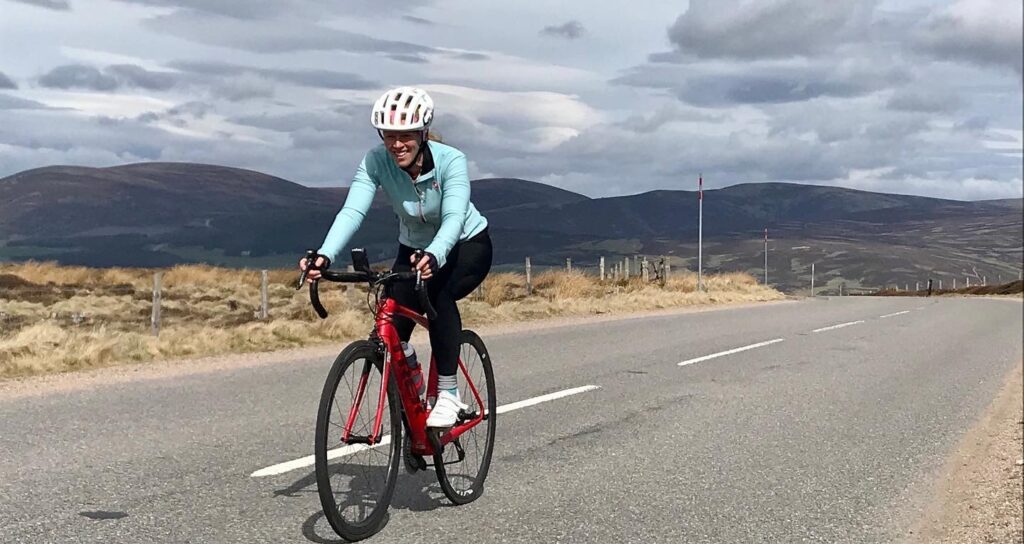
A smiling female cyclist in winter gear on a red bicycle rides past snow poles on a quiet country road with treeless hills in the background on a Skinny Tyres Ltd fully supported road cycling holiday in Scotland.

I arrived on Eriskay at 11:06 am and eased off on the short climb to the end of the road above Coilleag. From there I could look over the dark and stormy sound of Barra and as I stopped to take in the view, and a shiver ran through my body, I realised it was still going to be two hours before my family arrived on Eriskay. I made a quick phone call to check and see if they were on their way, but they hadn’t even left yet.

I rolled back down the hill with my fingers crossed, hoping the Am Politician Bar would be open. Fortunately it was. I hadn’t thought to take any money with me, but the woman behind the bar took pity on my drowned-rat appearance and offered me a mug of tea.

My epic ride ended rather ingloriously as I stood in the gents, trying to warm myself up and dry some of my kit off under the electric hand-dryer until my wife arrived with dry clothes. Despite the shivering, I had a big grin on my face as I remembered the ride I had just done and looked forward to telling everyone about it.

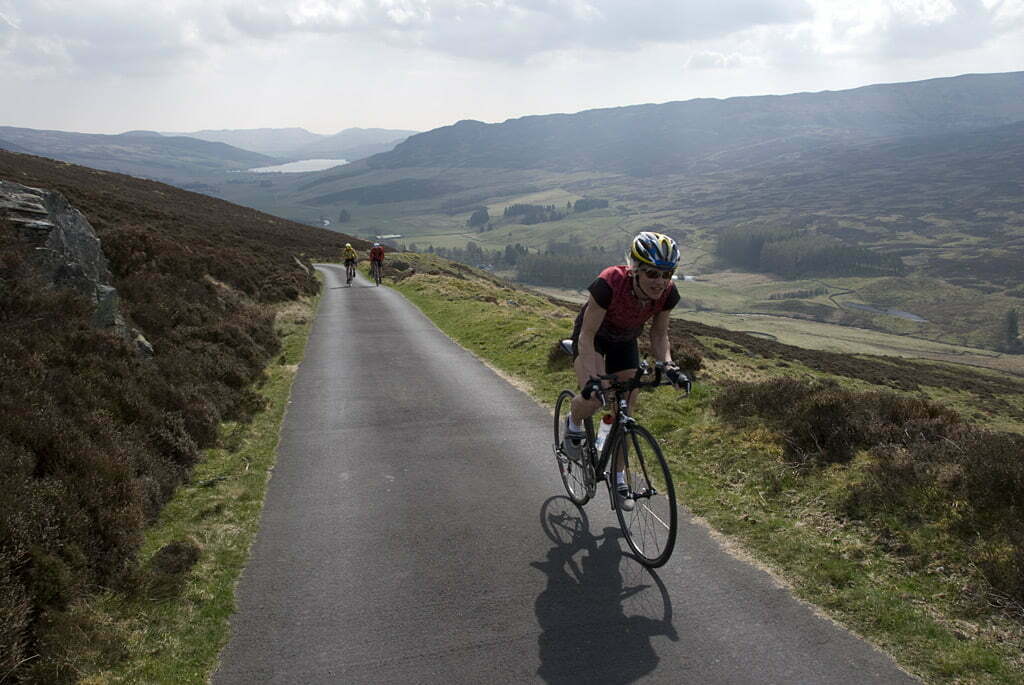
A female cyclist standing on her pedals races up a quiet country road ahead of two other cyclists on a Skinny Tyres Ltd guided road cycling holiday. There are a loch and mountains in the background.
Skinny Tyres logo showing the silhouette of a female cyclist against an abstract background with the words Skinny Tyres in white in the foreground.

Scot from Skinny Tyres cycling tours reflects on a life of cycling

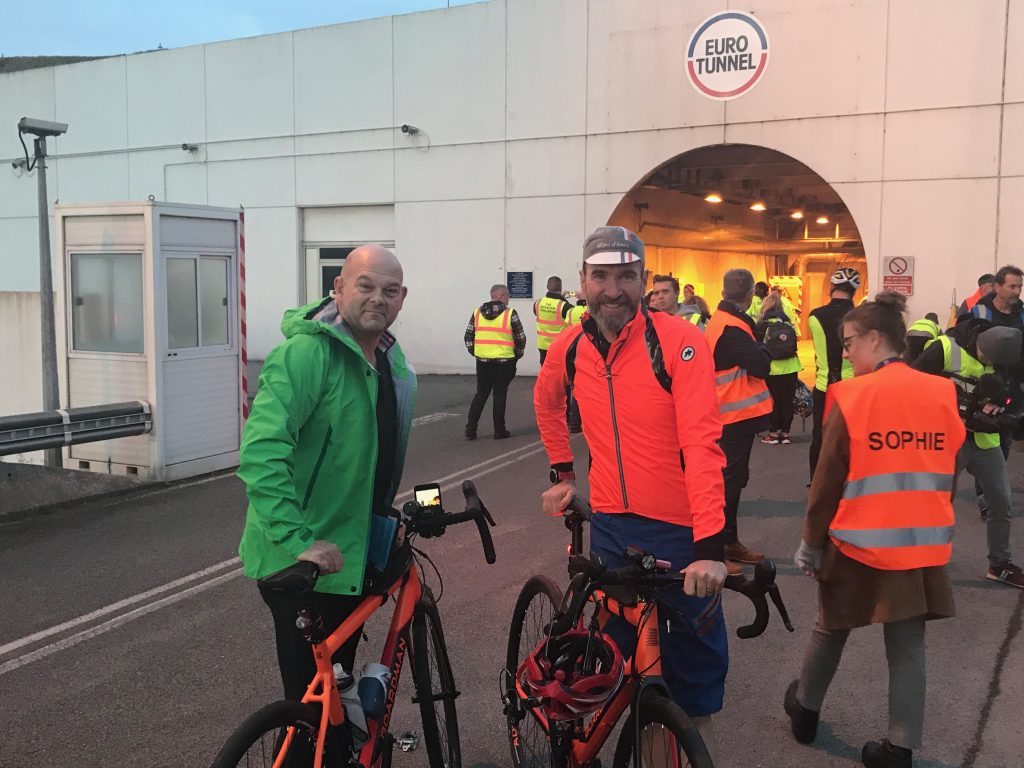
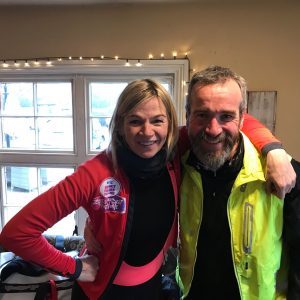
Scot Tares from Skinny Tyres and Steve Marson from Veloforte about to cycle through the Channel Tunnel whist supporting the BBC television Children in Need Rickshaw Challenge for the TV programme The One Show.

When I think back on a life of cycling, it sometimes surprises me how much bicycles have been part of my life. Although it is my day job, it has always been a passion and even now it is much more than just a way to earn a living.

At two years old my dad put me on a bike which I immediately fell off and for years afterwards I had the gravel marks on my forehead to prove it. 

Now I head to the mountains with my family on multi-day bike-packing adventures and enjoy aimless rides around the quiet roads of Highland Perthshire. Along the way I have made many friends: in fact there are very few people I know who don’t have a link to cycling in some fashion or other. 

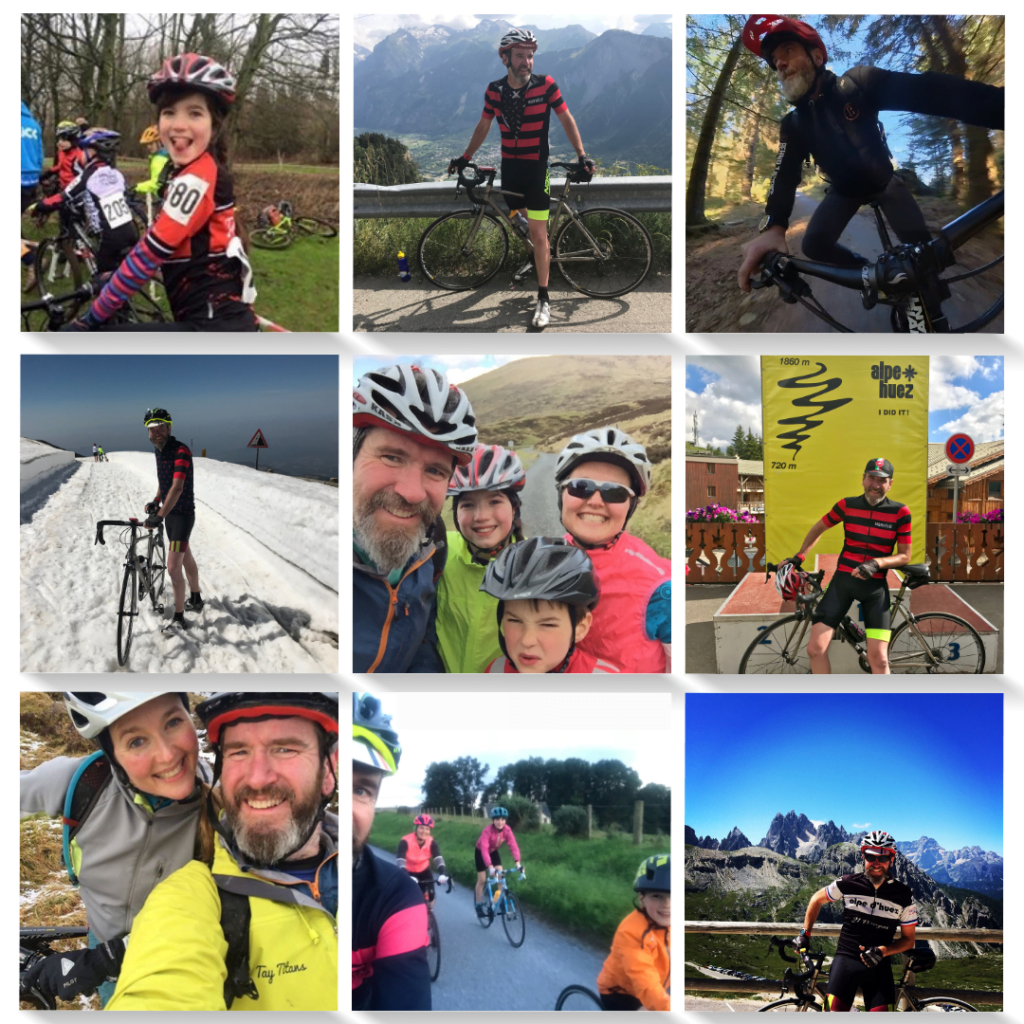
A montage of a life of cycling photos for the Tares family showing family days out on the bike, starts of races, ends of TdF climbs and excursions in the snow. Scot Tares is the founder of Skinny Tyres cycling holidays in Scotland.

I was never an academic school pupil so it was the Duke of Edinburgh’s Award that gave me the confidence to venture further afield and realise that there was more to life than qualifications. 

I grew up painfully shy but being in the outdoors helped me overcome that obstacle. From once lacking the confidence to put my hand up in class and answer a question, I now revel in standing up in front of large groups and speaking about bikes and cycling and often anything else that comes to mind.

It would have been hard to imagine then that my future self would travel the world meeting amazing people and that cycling would be my career and a passion that permeated every part of my life.

I have cycled through the Channel Tunnel; I have ridden alongside celebrities including Tom Daley and Zoe Ball; I have been involved in large-scale charity events and I have supported individuals in achieving their goals on cycling holidays in Scotland and all over Europe.

My children have just completed their exams, and my daughter has now finished her final year at school. For them, their journey is only at the beginning and they are still at such a young age with so much to experience, but the pressure and expectation to consolidate learning and results with a view to future careers is immense. The idea that this is the most important time of their lives and that the choices they make now will have a lasting impact on their futures can be suffocating and paralyzing.

I left school with few qualifications and even less of an idea of what I wanted to do with my life. It has been a bumpy yet fascinating ride to where I am now. Along the way, I have had many jobs and roles and it wasn’t until I was in my late thirties that I decided to start my own business and do what I loved, rather than what was expected of me.

Scot Tares, the founder of Skinny Tyres Ltd poses for a photo after having cycled up Alpe d'Huez in the French Alps in his red and black striped Morvélo cycling jersey.

If I could tell my younger self one thing, it would be not to stress on the details. 

The idea that money makes the world go around is a source of much unhappiness and leads to people making all sorts of decisions that are often not in their own best interests.

If you are passionate about and believe in something enough, then you will enthuse others and you can make a success out of whatever you choose to do. You may not end up wealthy in material terms, but you will be rich in happiness.

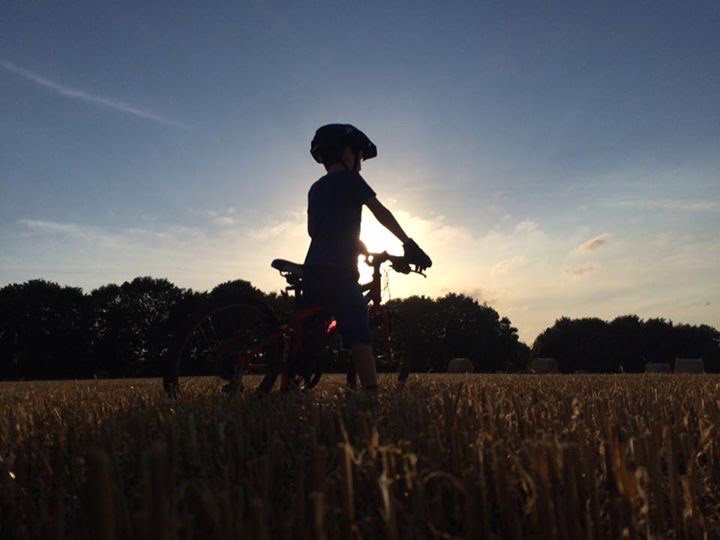
A child in silhouette stands astride their bike in a wheat field watching the sun set over the trees.
Skinny Tyres logo showing the silhouette of a female cyclist against an abstract background with the words Skinny Tyres in white in the foreground.

The Snow Roads Audax

The Snow Roads Audax

A challenging ride on the snow roads of Angus.

Audacious adjective extremely bold or daring; recklessly brave; fearless: an audacious explorer

Join Skinny Tyres on a supported cycling tour of the Snow Roads.

Audax rides started in Europe a little over one hundred years ago. The name, which is derived from the word audacious, was chosen to reflect the challenging nature of these events: in loosely controlled groups, cyclists complete a set distance, measured in kilometres, and are timed through a number of control points where their cards are stamped as evidence of their passing. These cards are known as brevet cards.

Still as popular as ever, there are literally hundreds of Audax rides going on throughout the year on quality routes in the UK.

The Snow Roads is an Audax event organised by Alex and Allison Pattison who are members of Angus Bike Chain Cycling Club. Together, they have organised it for the last four years and this year looks to be bigger than ever.

“The best rides are the ones where you bite off
much more than you can chew, and live through it”

– Doug Bradbury

This 300 km route has taken on a mythical status and, with almost 5,000 m of climbing, many regard it as one of the hardest in the UK. If you listen to the winter travel reports, you will be very familiar with the names of some of the roads along the way: the Cairn o’Mount, the Lecht and the Cairnwell are often among the first roads to be closed due to snowfall. Hence, the name of this route.

The time limit is just over 20 hours and riders set off at 6 am. The fastest ones complete the route in about thirteen hours. However, Audax events are not meant as races: the challenge is to complete the route within the time limit.

If it all sounds a little too adventurous for you, then the Pattisons also run a shorter 100 km ride, run on the same day, known as ‘Potter for Tea’. This is much more relaxed with a time limit of just under nine hours.

Both events attract riders from all over the UK; club cyclists, triathletes, tourers, mountain bikers and leisure riders have all tackled the challenge and it has even been completed by a couple on a tandem.

In recent years there has been a surge in sportive cycling events that, like an Audax are non-competitive timed rides.  So if you are wondering what the difference between the two is, I’ll leave you to ponder on the old joke:

Q: What’s the difference between a sportive and an Audax?

A: A Sportive is for people who like to pretend they are racing whereas an Audax is for people who like to pretend they are not racing.

The Route: Cairn o’Mount
Grade: Hard – road route
Details:12 miles / 20 km. A variety of routes can be added to extend the distance of this ride.
The climbOS 1:50,000 Map 45 – NO650735
Start/ Finish:Fettercairn – Cairn o’Mount – Fettercairn
The Climb
Details:2.1miles / 3.5 km at an average of 8.9%, starting from Clatterin Brig
For the more adventurous:Details of the Snow Roads Audax can be found at: 

http://www.aukweb.net/events/detail/12-68/

Skinny Tyres logo showing the silhouette of a female cyclist against an abstract background with the words Skinny Tyres in white in the foreground.

Cycling in the Outer Hebrides

Where land meets the ocean at the fringe of Europe.                               

Cycling in the Outer Hebrides is unlike any other kind of riding you might do. This chain of islands is remote and wild with a healthy dash of windswept ruggedness thrown in for good measure, and the experience you have here will stay with you forever. 

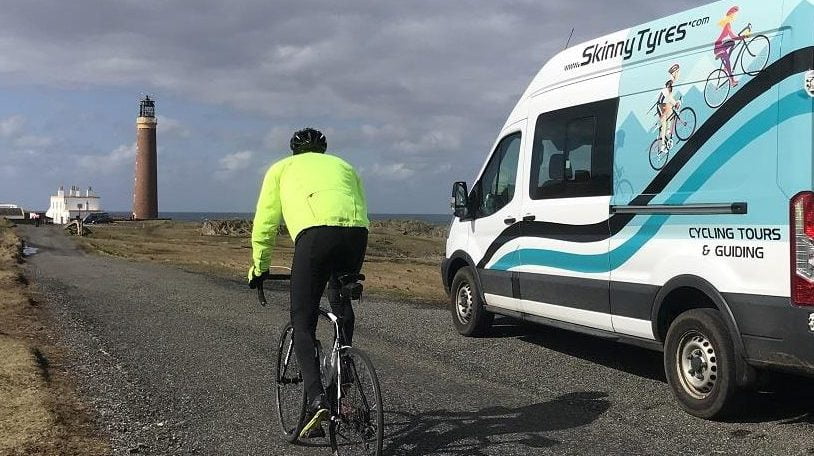
A cyclist in a bright yellow weatherproof jacket cycles past the Skinny Tyres customised support van towards a lighthouse whilst cycling in the Outer Hebrides.

Getting there

My wife loves these islands, North Uist in particular, and as a family our visits to the far north-west are regular. The journey to get there is long. We always joke that it would be quicker to fly across the Atlantic than drive to its edge. It is an arduous trip, but a journey that lets you know you have reached the very fringes of Europe. Once there, the landscape always leaves an indelible impression on my soul – from the endless deserted and pristine beaches to the primordial monuments and settlements that scatter the barren hillsides. The whole archipelago evokes a sense that you have reached the edge of the world and emits an oppressive atmosphere that feels like the sodden peat and raw, rock landscape is in a constant battle with the ocean for survival. 

The best way to see the Outer Hebrides is by bike

You could view this Wagnerian landscape from the comfort of your car, watching the quickly changing landscape pass you by as you drive over causeways battered by a never-ending barrage of salty waves – but where is the fun in that?  Much better to breathe in that briny sea air and feel a part of the environment. Like the terroir affects a fine wine, the context of the terrain you are riding through lends a flavour to the route you are cycling. 

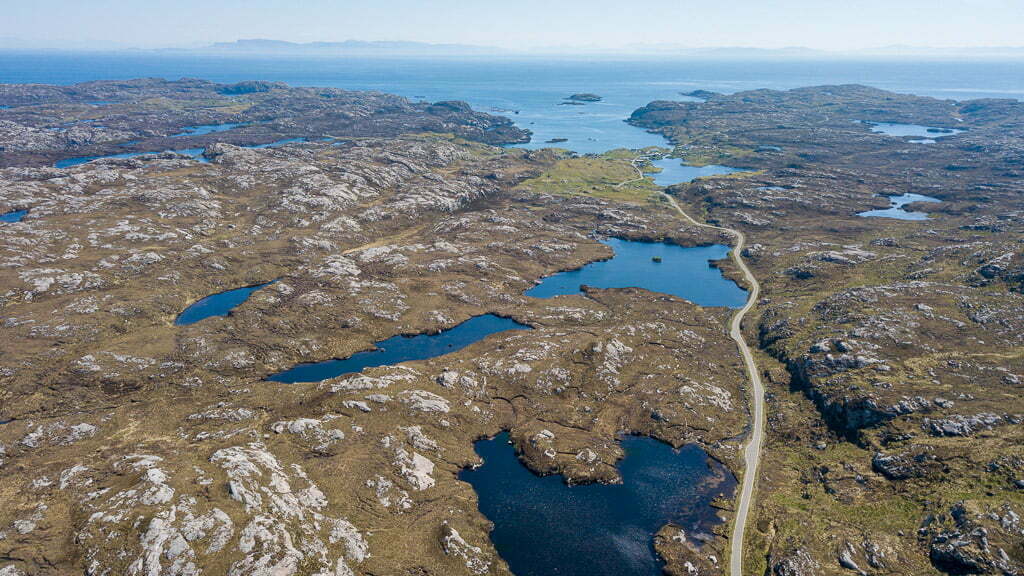
Cycling on the Outer Hebrides. An aerial view of the road show the stunning cycling

A wild and windy bike ride

The prevailing winds in these parts are predominantly from the west, meaning that a bike ride from Vatersaay in the south, heading north through Barra, towards the Uists and then Harris and Lewis is the preferred option of many riders. Occasionally that changes and on one occasion I received a gift of gale-force winds coming in from the Norwegian Sea. Fortunately that day I was heading south from Berneray to Eriskay and my wind-enhanced ride of 60 miles took me only two hours and six minutes. On the way, I battled to keep the bike upright at times against the winds. I had cycled across tidal causeways that were being battered by waves, covering me with ice-cold salt water. I continued down through South Uist, shadowed on my left by the ominous, dark presence of Hecla and Beinn Mhor. My destination was getting closer. My legs and body were starting to complain about the cold and the effort I was asking of them, but my mind was elated by the experience. I reached the Parliament bar on Eriskay (that of ‘Whisky Galore’ fame) soaked and shivering, but with a grin that reached from ear to ear.

I arrived on Eriskay at 11:06 am and eased off on the short climb to the end of the road above Coilleag. From there I could look over the dark and stormy sound of Barra. My epic bike ride ended rather ingloriously as I stood in the gents trying to warm myself up and dry off some of my kit under the electric hand-dryer until my wife arrived with a change of clothes.

A cycle ride in the Outer Hebrides is not for the faint of heart, but for those who do venture into this untamed landscape, the rewards are glorious.

Join Skinny Tyres on an Outer Hebridean adventure.

A lone cyclist in cold weather gear crosses a short causeway flanked by rocks on a Skinny Tyres Ltd guided cycling in the Outer Hebrides holiday in Scotland.
Skinny Tyres logo showing the silhouette of a female cyclist against an abstract background with the words Skinny Tyres in white in the foreground.

What a year 2018 has been

From riding with Zoe Ball and Greg James to cycling through the Channel Tunnel, 2018 has been an amazing year

2018 has been an incredible year for Scot from Skinny Tyres. He has cycled the length and breadth of Europe; supported events for Sport Relief and Children in Need, and worked with some great companies along the way. Additionally, he has led many Bikeability cycle coaching sessions for schools and other road cycling skills sessions for individuals. Skinny Tyres has welcomed cyclists from six continents to Scotland. The cherry on the top of this great year was when Scot got a chance to cycle through the Channel Tunnel. Read on to find out who we’ve worked with in 2018.


The Marmot Tours team poses for a photo in their Marmot Tours cycling jerseys at the Summit of Mont Ventoux with a fully customised support van and a Marmot Tours hire bike. Everyone is cheering and smiling.

Marmot Tours

Scot started the season with some unseasonably cold weather in Gran Canaria and Tenerife. Guiding with Marmot Tours, supporting riders get some early season miles in their legs, Scot spent five weeks on the two islands. The guiding season continued with Marmot Tours as Scot worked with them on tours in the Alps, Pyrenees, Massif Central and Provence. The Marmot Team always get together for a few days training in May prior to the summer season and 2018 was no different: this year the team gathered in Malaucène at the foot of Mont Ventoux. They even managed to sneak in a ride on the legendary slopes. Scot finished his summer season with Marmot Tours in September, again on Mont Ventoux, where a 4 am ride saw him add his third ascent to the summit having previously climbed the two other routes in May.


Scot Tares of Skinny Tyres wearing an orange Assos Sturmprinz jacket supports Alex Jones of the One Show and four amazing mums as they cycle the Mother of All Challenges in the Lake District for Sport Relief 2018.

Across The Divide

Skinny Tyres have worked on numerous events for Across The Divide for over six years and this year was no exception. We started the year working with Across the Divide on the BBC One Show Mother of All Challenges for Sport Relief. Working closely with ATD we supported the cycle event pre-planning and chaperoned the riders, Alex Jones and Greg White on the event in the Lake District

Next up with Across the Divide was the Youth Adventure Trust Taylor Wimpey Challenge 2018 in Snowdonia National Park where we put together a team to route mark the cycling challenges across roads and mountain tracks.

In October we supported the BBC Countryfile Ramble for Children In Need at Kirroughtree Dark Skies Park in Dumfries and Galloway as lead coordinators for Across The Divide.

Scot Tares of Skinny Tyres, wearing an orange Assos Sturmprinz jacket, in a group photo of the 2018 Children in Need Rikshaw challenge crew with Matt Baker at the centre.

Our final event we worked on for Across the Divide in 2018 was the One Show Rickshaw Challenge for Children In Need.

This event started in 2010 when One Show presenter, Matt Baker rode a rickshaw across the length of the UK.

Eight years later it has become a phenomenon with thousands of people lining the roads to cheer us on as we pedalled from Calais in France, through the Channel Tunnel, eventually finishing at Media City in Salford. Along the way the six young riders pedalling the rickshaw raised over £4.5 million for Children In Need. Scot and Skinny Tyres have been privileged to be involved in this event and work with Across the Divide for six years now as chaperone riders and riding the route prior to the event.


Threshold Sports 

2018 was the first time we had worked with Threshold Sports , but already we are putting dates in the diary for 2019. Our mission for 2018 was to provide chaperone riding support for Zoe Ball and Professor Greg White on Zoe’s Hardest Road Home as she cycled over five days and 350 miles from Blackpool where she was born to Brighton where she now lives, to raise money for Sport Relief and to increase awareness for mental health issues affecting people today.


Scot Tares of Skinny Tyres, wearing an orange Assos Sturmprinz jacket, supports Radio 1 DJ Greg James on Gregathlon: Pedal to the Peaks 2018 for Sport Relief. Another cyclist rides on the other side of Greg. It is a cold day and they all have their headlights on.

Limelight Sports

Limelight Sports were another company that Skinny Tyres worked with for the first time in 2018. Riding as a chaperone rider for Radio 1 DJ, Greg James, as he completed the final 120 miles from Glasgow to Fort William on his Sport Relief Gregathlon – 3 Peaks Challenge. The weather was atrocious and the riding hard, but Greg made it and raised over £1 million for Sport Relief.

You can watch Scot from Skinny Tyres (in the bright orange Assos jacket) in action with Greg James here.


Cycling Scotland

We have worked throughout the year with Perth and Kinross, Angus and Dundee City councils to deliver Cycling Scotland’s Bikeability courses to schools across these regions, training pupils in Level 1, 2 & 3 Bikeability and delivering CTA (Cycle Training Assistant) courses to teachers and volunteers.


ESSKA

The European Society for Sports Traumatology, Knee Surgery and Arthroscopy (ESSKA) held their second bi-annual conference in Glasgow in 2018 and over forty of their members joined Skinny Tyres on a four-day cycle tour of the Trossachs and Highland Perthshire. Riders came from as far afield as Russia, China, South America and the USA to ride some of the finest routes in the UK before returning to Glasgow for the start of their conference.


Aberdein and Considine

Skinny Tyres doesn’t just support you out on the road when you are cycling. Behind the scenes, we are constantly preparing and working on routes for individuals and groups who are completing personal cycle challenges to raise money for charity. For Aberdein and Considine we prepared a route for one of their members of staff who was riding from Newcastle to Aberdeen, stopping off at all their branch offices along the way.


Two male cyclists, one with a blue-framed bike, wearing backpacks stand on the bank of a river bending to the right. The sun is reflected off the water an there are hills and a forest in the background.

Coast to Coast

Two individuals asked us to support them on a MTB / gravel bike off-road route riding across Scotland from coast to coast. Starting in Aberdeen we travelled for four days across some stunning scenery to finish at the most westerly point on the British mainland at the lighthouse at Ardnamurchan point.


A selection of Veloforte energy and protein bars made with 100% natural ingredients.

Veloforte

At Skinny Tyres we are very fussy about what we eat when we are riding our bikes, so we are delighted to have been munching our way through a selection of Veloforte bars on our trips in 2018. With new flavours on the way for 2019 we are looking forward to ordering more to keep us pedalling.


What a year it has been – bring on 2019

Skinny Tyres logo showing the silhouette of a female cyclist against an abstract background with the words Skinny Tyres in white in the foreground.

There is snow excuse for not riding your bike

Sometimes it can be difficult to motivate yourself to get out and cycle in the snow, but when you do these are often the best rides you can have. So it was a few Saturdays ago as the snow fell heavily and I sat in my warm house with the fire crackling away. To be honest, if it hadn’t been for the sad, well-practised guilt-inducing look in my dogs’ eyes I wouldn’t have gone at all. I knew they were desperate to get out for a run, so I packed my mountain bike on the roof of the car and drove up to Craigvinean, by Dunkeld.

The snow was deep and untouched, save for a few animal tracks, and I broke the trail ahead, leaving a snaking tyre track behind, with a dab of a pedal on each side as my feet scuffed through the snow with each stroke. It was tough going and I could hear my heart thumping away, but I knew I needed to press on to maintain traction.

Momentum was an absent friend that day and despite being in my smallest gear, I was still grinding the pedals round to maintain any forward movement at all. Focussing on the track ahead, I tried to keep my upper body as relaxed as possible to aid with keeping the bike as straight as I could; no mean feat as the front wheel kept slipping left and right so I lost a bit more speed and had to fight to keep the bike upright. The dogs ran ahead of me, occasionally looking back to see what was taking me so long.

After three miles of climbing I passed below the summit of Creag an Uamhaidh and finally hit the downward slopes. I descended at speed, snow whipping up from the front wheel like a snow plough and my back wheel fish-tailing behind. The dogs were now in their element and sprinted past me, running at top speed. The descent, as it always is, seemed too short for the effort of ascent, but it had been exhilarating.

That evening I lay in front of the fire at home reading and my stomach muscles ached. The effort of keeping the bike both stable and moving through the snow had obviously employed more muscles than just those in my legs. I recalled how tough the climb had been and how much I had grovelled up it and decided that I would head out and do it all again tomorrow.

Get out and ride.

Biking info

 
Where to ride: Craigvinean
Location:OS Landranger 1:50,000 Map 53Start – NO014423
Details:There are many routes to explore in Craigvinean that are suitable for all ages and riding abilities, including those looking for some downhill thrills.My route ascended through the forest, below the crags of Craigvinean and onto the summit of Creag an Uamhaidh (NN980460), before descending towards Dalguise and then back towards the Hermitage.
Skinny Tyres logo showing the silhouette of a female cyclist against an abstract background with the words Skinny Tyres in white in the foreground.

Get in the zone with your cycle training

A recent study at Stirling University investigated how training intensity can have measurable effects on performance, and the results may not be what you expect. The 29-week trial found that a programme of predominantly low intensity work mixed with around a 20% volume of high intensity sessions led to greater improvements in fitness than a programme that maintained a moderate intensity of workout throughout.

For many people new to cycling this may seem counter-intuitive and they might assume that periods of cycling at a very low intensity is a waste of time, but it is this very approach that has formed the basis of a cyclist’s winter training programme for decades.

Dr Stuart Galloway of Stirling University said, “It is a case of training smarter. We found in these cyclists that if you can make the hard sessions harder and the easy sessions easier then you will likely see better progress. Amateur athletes tend to spend a lot of their training in a moderate intensity bracket which, in our study, showed much smaller improvements.”

The question for those amateur cyclists who may not have experience in gauging the intensity of their efforts is how much is ‘hard’ and how little is ‘easy’. Well, the easiest way, without using technical and often expensive equipment such as power meters and heart rate monitors, is to gauge your effort using perceived exertion.

Based on a set of zones, where zone 1 is cycling at a pace where your gran with a basket full of shopping on her bike could pass you, to Zones 5 and 6 where you can’t talk and can only maintain the effort for a few seconds at a time, this method is surprisingly easy to use and, if you trust your intuition, a relatively accurate method to gauge the intensity of your performance.

Many amateur cyclists are turning to professional coaches to develop structured and specific training plans based on a combination of intensity and volume; even those with very little time to train can achieve improvements in their performance and, as an added bonus, longer, lower intensity rides are key to losing weight. For those training for events such as the Etape Caledonia, this ‘smart’ approach to cycling could be what you are looking for to achieve your goals.

Originally published in the Courier 26.1.13
Scot Tares

Where to ride

 
Where to ride: Den of Alyth – a short MTB route
Location:OS Landranger 1:50,000 Map 53Start – NO235486
Details:The Den of Alyth offers a short route in this deep-sided river gorge. It is suitable for children, although care should be taken at some of the higher sections alongside the Alyth Burn. For older riders, there are plenty of places to practice your MTB skills, or link up with other trails around Alyth
Skinny Tyres logo showing the silhouette of a female cyclist against an abstract background with the words Skinny Tyres in white in the foreground.

The future of cycling is in the balance

511P1050852A fine art of balancing

Watch the video

As a cycle coach, one of the most common questions I get asked by parents of young children is, “What is the quickest way to get my child to learn to ride a bike?” My immediate and unwavering response is to get them a balance bike. Both of my children learnt on them as young as two, and by the time they were three they were pedalling without ever having used stabilisers and were joining us on cycling trips into the Cairngorms.

The concept of the balance bike has been around for centuries and the design dates back to the early velocipede created by the German, Karl Drais. This was called a Laufmaschine, and the rider sat on the saddle and propelled the bike by walking his feet along the ground. Looking at drawings of Drais’s machine, it is difficult to see much difference in design to modern balance bikes, but why change something that clearly works?

The fine art of balancing is the fundamental key for anyone who wants to pedal a two-wheeled bike. However, most training methods for young riders give them the experience of riding a bike, but take away any need to learn to balance, hence the inevitable difficulty when the training wheels are removed and the hard part of cycling has to be learnt from scratch. Balance bikes teach a child to propel themselves forward using their feet, meanwhile finding a comfortable position on the bike. As their confidence grows, they can lift their feet for as little or as long as they want and let the bike roll along. For the very young rider this can take longer, but the fun is in the learning. For parents it can be a liberating experience. When my wife and I went for dog walks in the woods we normally wouldn’t have been able to go far pushing buggies, but with my daughter at four pedalling like she’d ridden for decades and my boy, just turned two, scooting along on his balance bike, we were able to walk for a couple of hours without a grumble of discontent from our two young wheelers who happily rode through puddles and up and over bumpy ground.

Even in a world of TV and computerised games, the sheer joy for a child when they learn to ride a bike leads to a path of discovery and adventure before them. This journey starts with a balance bike, but it is when a child has mastered the act of balance that the fun begins. On many occasions I’ve seen children that have learnt to balance put down their balance bike and pick up a pedal bike and go straight away; it was that easy. For my own two, it took a few minutes, five at the most to get to grips with the pedals, but it still wasn’t long before they were hurtling down the dirt track beside our house, whooping with delight.

For many of you reading this, however, you may have already gone to the expense of buying a bike with pedals and you don’t want to spend more money on buying a balance bike; the simple answer is take the pedals off and voila, you have a balance bike.

More manufacturers are adding balance bikes into their children’s range and the choice available is ever widening. For me, the key factor is to keep it simple on the bike, if a child is distracted by other bits and pieces on the bike they will take longer to learn to balance.

Whichever bike you choose, it is a good idea, where possible, to try out the bike first, but in general balance bikes are so basic that you can’t really go wrong as long as you have the right size.

Some features to look out for:

Minimum inside leg measurement – this will dictate the child’s ability to sit on the saddle and touch the ground with their feet, also known as step-over height. The lower the measurement, the more suitable the bike is for younger children, or those with shorter legs. Most of the bikes have adjustable seat heights that allow the saddle to be raised as your child grows.

Rear brake – some balance bikes don’t have a brake which means the rider has less to think about as they learn.  However, as they grow in confidence and speed, a brake is recommended. Some balance bikes that don’t come fitted with a brake have an option to buy the brake as required. My two children learnt without a brake until they got a pedal bike. I feel it helped with perception and control of speed, but their mother wasn’t convinced when the soles of their shoes wore out.

Weight – the heavier a bike is, the more difficult it will be to ride and is likely to discourage smaller children.

Steering limiter – most of the balance bikes come with a steering limiter that prevents the handlebars turning 360 degrees. These can limit the full steering motion and avoid the handlebars being turned at an acute angle and causing a fall.

Tyres – pneumatic tyres take more maintenance and upkeep, but are easy to replace and repair as required. Puncture proof tyres are more durable and may be a selling point for parents with no mechanical expertise.

Some balance bikes to consider

(Prices, sizes and details correct at time of writing)

Isla RothanThe Isla Bike Rothan Balance Bike – £129
Colours – chilli red / hot pink

Minimum inside leg measurement
30 cm (11.8”)

Rear brake – yes

Size – 12″ wheels, 4″ frame

Weight – 3.5 kgs (7 lbs 15 oz)

Frame – 7005 T6 heat treated aluminium

Fork – hi ten steel

Headset – 1″ ahead with steering limiter

Spokes – steel, black

Tyres – pneumatic with presta valve inner tube

Isla Rowntree is passionate about making kids bikes and the Rothan is an ideal starter balance bike with a sturdy, but light frame. Original Rothans were built without brakes, but the current design has one back brake that is easy to reach and pull with small fingers. The tyres are pneumatic with presta valve inner tubes that allow for a higher pressure. They require maintenance in the form of regular pumping, but this is something kids enjoy joining in with. They are not puncture proof, but tough wearing all the same. The popularity and quality of Isla Bikes is evident from the number of children that use them across the UK at youth and junior cycling events. At the mid price range they are a good mix of quality build and components without excess, and Isla Bikes even offer a buy back, part exchange scheme when buying a bigger bike from their range, dependant on the original bike’s condition – http://www.islabikes.co.uk/


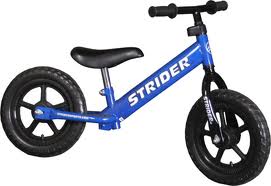
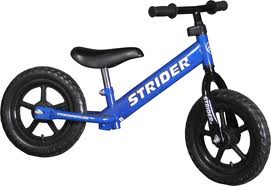
The Strider PreBike ST3 – £84.99

Strider

Colours – orange, red, pink, yellow, blue and green

Minimum inside leg measurement
28 cm (11”)

Back brake – no but optional friction brake available

Wheels – 11”

Weight – 3.1 kg (6 lbs 9 oz) without optional brake

Frame – custom welded, thin gauge steel alloy

Fork – welded steel

Headset – no steering limiter

Spokes – plastic, black

Tyres – moulded foam

The Strider offers a light frame without a back brake which means the rider has to control their speed using their feet.  This gives them one thing fewer to think about when they are learning.  On the downside, however, as they gain confidence and speed this can wear shoes out quickly. The manufacturers offer an optional friction plate brake that is operated by using the foot to press the plate against the rear tyre. My reservation about this system is that the child is learning a braking system that will differ from the handlebar mounted brakes on their next bike. The Strider also has footplates on the rear stays that allow the rider to stand up as they roll. The moulded foam tyres are virtually maintenance free and are puncture proof.  Lastly there is no steering limiter.  The manufacturers claims that this allows a child to learn about setting their own steering limits through rider input.

http://www.stridersports.co.uk/

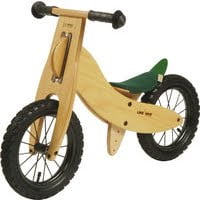
The Like a Bike Mini Forest – £169Like a Bike Mini Forest

Colours – natural beech wood with red, black or blue trim

Minimum inside leg measurement – 27 cm (10.5”)

Back brake – no

Weight – 3.5 kg (7.7 lbs)

Frame / fork – beech marine plywood

Headset – steering limiter

Spokes – steel, black

Tyres – pneumatic with Schrader valve inner tubes

Made in Germany by Kokua, the original Like a Bike was designed by Rolf Mertens in 1997 who is credited with being the originator of the new-wave of balance bikes now on the market. Very similar to the hobby horse of years gone by, the Like a Bike is made of wood. It’s a beautiful object to look at and of all the bikes reviewed here, it has the lowest stand over height, meaning that this should fit even the smallest of riders. Saddle adjustment is limited to four set heights, although a height extension post is available to accommodate a further 3 cm of stand over height. Interestingly, unlike the Strider, the Like a Bike has a steering limiter that Kokua claims avoids potential jack-knife crashes.

The full range of Like a Bike wooden bikes offers a multitude of choices including spoked and disc wheeled bikes, The Racer, which has skinnier wheels, and the Wing, which has integrated footrests. The Like a Bike is at the top end of the balance bike price range but, for those who like something to look a bit different, the design of this bike certainly makes it stand out.

http://www.likeabike.co.uk/

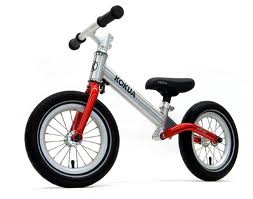
Kokua JumperKokua Jumper – £155

Colours – Kawasaki green, bright red,
metallic purple, metallic red, juicy orange, metallic blue, royal blue, pearl white

Minimum inside leg measurement
35 cm (10.5”)

Back brake – no but option for front brake to be fitted

Wheels – 12”

Weight – 3.4 kg (7.5 lbs)

Frame / fork – 7005 aluminium

Headset – steering limiter

Spokes – steel, silver

Tyres – pneumatic with Schrader valve inner tubes

The Jumper comes from the same stable as the wooden Like a Bike but, with a higher step-over height, it is suitable for older riders. The design, with the exception of the wooden framed Forest, is similar to many other balance bikes here, with one big exception – the Jumper has rear suspension. Whether you feel that a balance bike has the need for suspension or not, it is certainly a selling point that might attract both parents and children alike. My own opinion is that a rider who has progressed to the point of skill where they require suspension is generally ready to move up to a pedal bike. The Jumper has the highest step-over height of all the bikes here, so it certainly targets an older rider. Built for Kokua by folding bike specialists Dahon, the Jumper is certainly of a high quality build and looks great and has built in footrests.

http://www.likeabike.co.uk/

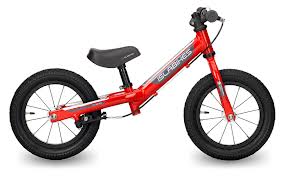
StriderRidgeback Scoot – £99.99

Colours – lime, tangerine, silver,
matte grey, blue, purple, pink

Minimum inside leg measurement
32 cm (12.6”)

Back brake – yes

Wheels – 12”

Weight – 3.4 kg (7.5 lbs)

Frame – 6061 heat treated aluminium

Fork – high ten steel

Headset – steering limiter

Spokes – steel, silver

Tyres – pneumatic with Schrader valve inner tubes

The Scoot is another great looking bike with a wide range of colours to suit the tastes of even the most choosy child. One feature on this bike that doesn’t appear on any other bike looked at here is the carry-grip on the saddle, which is ideal for parents who have to carry the bike when their child doesn’t want to ride it.

http://www.ridgeback.co.uk/bike/scoot-matte-grey


Skinny Tyres logo showing the silhouette of a female cyclist against an abstract background with the words Skinny Tyres in white in the foreground.

Get in the right gear

Getting in the right gear for cycling doesn’t mean donning your best lycra.

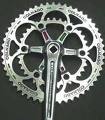
Chainring and crank

Using the gears on your bike correctly will make cycling easier and more pleasurable. Unfortunately, the subject of gears can add a whole new layer of confusion to cycling to the point that many just avoid it completely. However, it doesn’t need to be confusing: getting to know how your gears work can bring a new dimension to your riding.

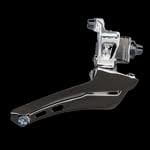
front shifterConsider that on a bike you are the engine and the gear you are in affects how your engine performs. Lower gears make pedalling easier but as you pick up speed, staying in a low gear means your engine will start to over-rev. An example I often see with novice riders is that when they see a hill they instantly change down into their lowest and easiest gear. This causes the rider to lose any forward momentum so they have to use more energy to drive the bike up the hill.
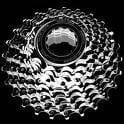
Consider how this would feel in a car if you suddenly changed from fifth gear to first gear at the first sight of a hill, and how it would affect your fuel consumption. That is not to say that you shouldn’t use easier gears when climbing, just that you should change down gradually as required. The key is to try and maintain a steady rev-count on your pedal cadence by using your gears and, as with a car where smooth driving can save you fuel, riding in this way will save you energy.

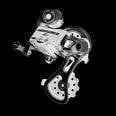
rear deralliuer

Perhaps the best way to figure out the gearing on your bike is to find a short, quiet stretch of road on a gradient and ride up and down it trying out as many combinations of your gears as possible, feeling how each affects your momentum.

A word of advice, however, beware of cross-gearing.  This is when you ride with your chain on the outer chainring at the front and on one of the larger cogs of your cassette at the back, thus making your chain run diagonally, rather than parallel to the bike, putting it under strain and potentially causing it to snap.

rear sprocketinverse

Gearing is a subject I could write pages about and routinely devote whole coaching sessions to. To gain proficiency takes effort and thought, but don’t let the complexity of the subject put you off finding out more. Once it’s clicked, you’ll find a whole new world of riding out there.

Get out and ride.

Scot Tares

Twitter: @SkinnyTyres

Where to ride: Dronley
Location:OS Landranger 1:50,000 Map 54Start at NO343359

Distance: 4 miles/ 7 km return

Details:This short off-road cycle route is situated a mile north of Muirhead at the back of Dundee. It’s suitable for children of all ages and follows a section of the disused Dundee to Newtyle railway line


Skinny Tyres logo showing the silhouette of a female cyclist against an abstract background with the words Skinny Tyres in white in the foreground.

Subscribe

Skinny Tyres News