Cycling Scotland’s Snow Roads in pursuit of trivia

On our cycling tour of Scotland’s Snow Roads you scale three of the highest public roads in the UK, so whilst nothing about the riding could be accused of being trivial, the route itself could be a journey through The Encyclopedia Caledonia, where every pedal stroke uncovers a new category of Scottish trivia.

So, because we delight in sharing Scotland’s stories as much as its scenery and cycling, we thought we’d serve up a selection of fun facts for you to digest along the way.

A view of rugged, treeless hills from high up Derry Cairngorm in the Cairngorms National Park.
CC license: Beinn Mheadhoin from Derry Cairngorm by Mick Knapton at English Wikipedia

Cycling Scotland’s Snow Roads: geography

Most of the pedalling on our Snow Roads cycling holiday happens in or on the fringes of the Cairngorms National Park.

Covering 4528 sq km, this is the UK’s largest national park. It boasts the largest area of high-level tundra-like plateau in Britain with a unique sub-Arctic ecosystem more similar to environments found in Scandinavia than the UK.

Characterized by dramatic granite outcrops or tors, and vast ancient Caledonian forests that date back to the last ice age, it is home to five of the six highest mountains in the UK.

Nearly half of the park is classified as wild land featuring vast, rugged terrain with few signs of human impact, making it perfect terrain for cyclists seeking solitude and untouched beauty.

CC license: Balmoral Castle 2 by Nick Bramhall from Aberdeen, UK

Cycling Scotland’s Snow Roads: history

On 8 September 2022, at the age of 96, Queen Elizabeth II passed away peacefully at Balmoral Castle.

She was the first British monarch to die at Balmoral and her deep connection to it echoed that of her great-great-grandparents, Queen Victoria and Prince Albert, who purchased the estate on the River Dee in 1852. The castle was built as a summer residence the following year. So, the area once known as Deeside acquired a prefix and became Royal Deeside.

Queen Victoria’s constant love for the region popularised the name and it has been in common usage ever since.

A large part of Royal Deeside lies within the Cairngorms National Park. As you ride through the heart of it past Balmoral Castle to Ballater, it’s easy to see why it has captivated generations of royals and visitors alike.

The beautiful village of Ballater, nestled in a crook of the River Dee, boasts local businesses aplenty proudly displaying Royal Warrants above their doors, indicating that they are suppliers to the royal household.

Cycling Scotland’s Snow Roads: art and literature

The Old Man of Lochnagar is a children’s book written in 1980 by the then Prince of Wales (now King Charles III) and sold in aid of The Prince’s Trust.

The story is about an energetic and carefree old man who lives in a cave by the loch (lake) under Lochnagar* mountain. He roams the countryside interacting with the birds and fish, and other secret local inhabitants. The book is a fantastical celebration of the natural world, clearly inspired by the landscape of the Balmoral estate which is overlooked by Lochnagar.

*Lochnagar is a Munro, a Scottish mountain over 3000 feet (914 m). Bagging a Munro means reaching its summit.

The name Lochnagar originally applied only to the small loch, Lochan na Gaire (little loch of the noisy sound), in a deep corrie at the foot of the eastern ridge. The noisy sound refers to the wind and water moving through the rocky environment of this large glacial bowl.

Later, people began to refer to the entire mountain as Lochnagar.

CC license: Copper Whiskey Stills – Glenfarclas Distillery – Scottish Highlands
by string_bass_dave

Cycling Scotland’s Snow Roads: sport and leisure

Royal Lochnagar is also the name of a single malt whisky. While our route doesn’t pass right by the distillery, you do ride through Speyside, Scotland’s most prolific whisky-producing region, home to more than half the country’s distilleries.

Highly regarded Speyside whiskies include The Macallan, Glenfiddich, The Glenlivet, The Balvenie and Aberlour.

When we raise our glasses in Scotland, we don’t say cheers. Instead, we say slàinte mhath (pronounced slan-cha-va) meaning good health.

CC license: Scottish osprey nest by marneejill

Cycling Scotland’s Snow Roads: science and nature

Did you know ospreys have a special extra eyelid, a bit like a contact lens, that helps to protect their eyes when they hunt under water?

Or that they have special spines on their feet to help them keep hold of their slippery prey?

What about the fact that they hold a fish facing forwards to limit air resistance and help with flight when taking their catch home for dinner?

Ospreys became extinct in the UK in the early 20th century.

In 1954, Loch Garten Nature Reserve welcomed a successful breeding pair of ospreys. This marked the beginning of a major conservation success story in Scotland. Today, there are an estimated 250–300 breeding pairs.

Whilst spinning your wheels through Speyside you ride past Loch Garten and may well spot an osprey as they are often seen in the Highlands and central Scotland from March to September.

Cycling Scotland’s Snow Roads: entertainment

With the final season of Outlander now streaming nearly 12 years after its first episode aired, we wonder if you even remember Craigh na Dun

You may not recall the name, but we’re actually pretty sure that you know where we’re talking about – the magical hillside with the standing stones that allow Claire to travel through time.

Whilst Craigh na Dun doesn’t exist in reality, the hillside does. And it’s near Kinloch Rannoch which you cycle through on Day 1 of our Snow Roads holiday.

However, there are no standing stones there as these are also fictional. According to the executive producer of the series, they were carved from Styrofoam. It has been suggested that Diana Gabaldon’s inspiration might have come from the very real Calanais (Callanish) Standing Stones on the Isle of Lewis and which you can visit on our Hebridean Way holiday.

These pub quiz gems are but a few from the multitudes that are woven into the rich tapestry of Scotland’s identity.

If you’d like to travel by bike through more of our legendary past and fascinating present, why not check out our Snow Roads itinerary. Or any of our other cycling holidays – we pursue trivia on two wheels everywhere we go!

Skinny Tyres logo showing the silhouette of a female cyclist against an abstract background with the words Skinny Tyres in white in the foreground.

Who is Scot Tares? A brief history of Scot and Skinny Tyres

If you’re thinking of going on a cycling holiday with a small, family business, we appreciate you probably want to know a little bit about that business before committing to your booking.

Obviously, you can read our about page to learn something about the team, but we imagine you’re curious to discover more than just our credentials.

Our founder is Scot Tares. “But who is Scot Tares?” you may well ask. “And why did he start a company running cycling holidays in Scotland?”

So, we asked Scot to sit down and answer these questions by introducing himself personally. Because at Skinny Tyres, we’re all about the personal touch.

A black and white image of a toddler astride a wee bike wearing a helmet and a stripey long-sleeved sweater.

Scot Tares: the infant

I was born in Dundee a long time ago.

The first time my dad put me on a bike, I was two. I fell straight off and smacked my head on the ground. I carried the gravel scars on my forehead for years afterwards.

But, strangely, that didn’t put me off.

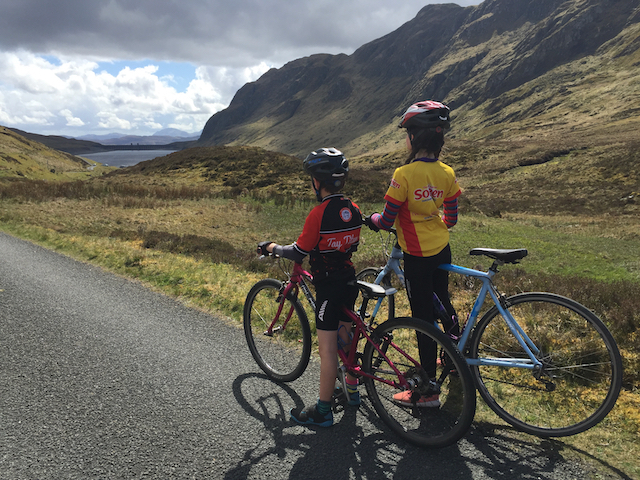
​A young boy and girl stand astride their bikes looking south towards Lochan na Lairige, just below the summit of Ben Lawers. The girl is wearing a Soreen Malt Loaf cycling jersey and the boy is wearing a Tay Titans Junior Cycling Club jersey.

Scot Tares: the schoolboy

Growing up, I was incredibly shy and quite introverted. I felt like I didn’t fit in and I was much more comfortable in my own head than putting my hand up in class or being the centre of attention.

Being outdoors and riding my bike helped because it gave me space and a bit of freedom from the social discomfort I felt.

The turning point for me was working towards the Duke of Edinburgh’s Award. Through that, I discovered orienteering, volunteering and teamwork. I realised I was capable of rising to a challenge and felt valued for my ability to support others. My self-confidence started to grow and this led to me joining my first cycling club, which helped me come out of my shell further.

There was no overnight transformation, but I gradually began to see myself differently and to accept new possibilities.

Scot Tares: the eureka moment

A couple of decades later, I went on a cycling trip to the French and Italian Alps.

It was everything you’d imagine: big climbs, dramatic mountains, long days on the bike. I loved it.

Shortly after I got home, I went for a hundred-mile ride around Highland Perthshire with my local cycling club. It was a stunning day and arriving at the top of Ben Lawers after an exhilarating climb, I suddenly realised that, just as much as the Alps, Scotland offered everything I loved about cycling: challenge, beauty, space, and variety.

It was like I was seeing it with fresh eyes. I felt a real sense of pride in what we have here, and a strong desire to share that experience with other people.

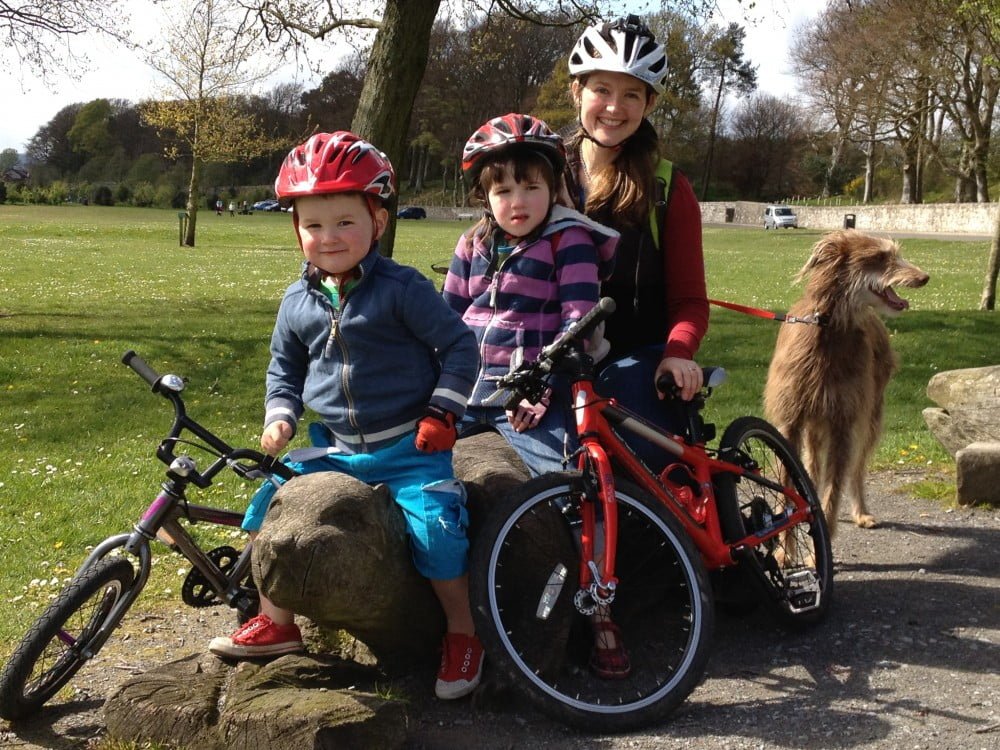
A young mum sits on a wooden carving of an otter with her small children during a family bike ride round Loch Leven. The family dog is there too.

Scot Tares: the leap of faith

After that ride in Perthshire, I knew I wanted to do something with cycling in Scotland. I didn’t have a detailed plan, but I had a clear idea: cycling tours that welcomed all adult riders, whatever their ability or background.

It took a few more years to pluck up the courage to leave full-time paid employment and go for it. If it hadn’t been for the unwavering support of my wife, Kirsteen, I might never have done it: right from the start, her belief in the idea pushed me forward whenever I felt overwhelmed.

In 2009, I finally took the plunge, and Skinny Tyres was born.

Scot Tares: the Skinny Tyres way

Having been on organised cycling holidays myself, I’d experienced trips where riders were judged by their speed and told to ride different routes or pressured into keeping up.

That never sat comfortably with me. Not because there’s anything wrong with riding hard or pushing yourself, but because everyone enjoys cycling differently. I wanted to create holidays that respected that.

With Skinny Tyres, the idea has always been to give people choice. You ride at your own pace, you take on as much challenge as you want, and you enjoy the experience in your own way, whether that’s chasing the climbs, marvelling at the views, stopping to paddle at the beach or lingering over coffee and cake in a local café.

I wanted to create an environment that feels relaxed, supportive, and welcoming without taking away any of the sense of achievement that makes cycling so rewarding.

Scot Tares: a life on two wheels

Around the same time I started Skinny Tyres, a friend and I set up the Tay Titans junior cycling club in Perth. I wanted young people to experience the joy of cycling whilst building their confidence and making friends as I had decades before.

Although I stepped back from the club a few years ago, it’s still thriving, and I’m very proud of what it’s become.

Over the years, I’ve been lucky to be involved in charity rides like BBC Radio 1’s Longest Ride with Greg James for Comic Relief, and to coach young riders at schools around Perth and Kinross. Helping people improve, achieve their goals and enjoy cycling, whatever their level, is hugely rewarding.

Cycling is a passion and it has always been a part of who I am. Through Skinny Tyres and my other cycling projects I have been able to share that joy with others. And, whether it’s one unforgettable ride, or the start of a lifelong love of cycling, I’m incredibly grateful for that.

If you like the sound of Scot and the Skinny Tyres way, we offer small-group, fully supported cycling holidays with thoughtfully planned routes, flexible pacing and van support, so please have a browse of our itineraries and our FAQ.

If you still have queries, we’re always happy to put your mind at rest so please don’t hesitate to get in touch.

Skinny Tyres logo showing the silhouette of a female cyclist against an abstract background with the words Skinny Tyres in white in the foreground.

7 reasons people fall in love with cycling in Scotland

Scotland is renowned for its rugged landscapes, its feisty natives and its gory history, so people who come here with their bikes often imagine they are embarking on a wild adventure. They don’t anticipate that they will fall in love with cycling in Scotland. Yet many do.

Riding around Scotland has a way of shifting your perspective. Rather than flying by, days gradually unfold. Effort feels purposeful rather than pressured. And somewhere between the tranquillity and the breathtaking scenery, people often realise they’re enjoying not just the riding, but how it makes them feel.

What they don’t expect is how enduring the experience will be.

Here are some of the reasons we think that cycling in Scotland stays with you long after the event.

A road weaves its way up the side of a grassy green hill to the horizon in untouched rural terrain. The sense of space helps people fall in love with cycling in Scotland.

1. The sense of space

Cycling in Scotland gives you something that’s become surprisingly rare: space.

Not just space on the road, but space in your head.

Long stretches of quiet tarmac, views all the way to the horizon, and expansive skies slowly shift your attention. You stop scanning for traffic and start to become absorbed in the countryside. The rhythm of your pedalling settles. Conversations drift and pause. Riding becomes less about arriving somewhere and more about being present where you are.

It was on a long, exhilarating ride up Ben Lawers in Perthshire that this really clicked for Scot Tares, owner of Skinny Tyres. The climb wasn’t easy, but it felt amazing: the steady effort; the peace; the sense that the landscape was inviting him upward rather than testing him.

Many cyclists in Scotland find they often ride further or climb higher than they expect to; not by pushing harder, but because the miles feel different here. Less hurried. Less demanding. More generous. This sense of space is what stays with people long after their ride. It’s why cycling in Scotland doesn’t just feel scenic, it feels restorative.

2. Achievement without bravado

Cycling in Scotland has a way of reframing what achievement means. The climbs are often sustained rather than steep and the distances measured rather than rushed. The rewards come from persistence rather than bursts of effort.

There’s no pressure to prove yourself. The landscape doesn’t encourage showmanship or speed; it asks only that you keep on pushing your pedals. Progress is measured quietly; in height gained, in horizons reached, in the happy satisfaction of moving through a place under your own steam.

Because of this, riders often finish a route feeling unexpectedly proud. Not smug, just quietly pleased, because it’s an achievement that feels grounded and personal. One that leaves you feeling capable rather than spent, which is a big part of why people fall in love with cycling here.

3. Quiet roads that nurture connection

One of the great, understated pleasures of cycling in Scotland is how often the roads fall silent. Traffic thins and, in places, disappears altogether as the route merges with dedicated cycle paths. The necessity to be constantly alert diminishes. And in that peaceful place, something else has room to take root.

On calm stretches of road, conversations begin to flow. Riding alongside a fellow cyclist, you might chat easily for miles then slip into a companionable silence, where words naturally ebb for a time before the next exchange emerges.

In these moments people often notice a deeper sense of connection. With the place they’re moving through. With their riding companion. And occasionally with their own thoughts, as their mind is given a rare chance to wander without interruption.

These quieter miles, when cycling becomes something shared rather than solitary, are rarely the ones people talk about beforehand, but they’re often the ones they remember most afterwards.

4. Captivating scenery

As knowledgeable of the English language as we believe we are, even we struggle to find words that faithfully convey how mesmerising Scotland’s landscapes can be.

We could wax lyrical about vast lochs mirroring expansive skies, or rolling hills stretching to meet distant peaks, for example, but we feel it is slightly beyond us to create magic. The magic of pedalling through an ancient Caledonian forest with your nostrils full of the rich, earthy scent of pine. The magic of witnessing a shaft of light piercing the clouds and painting a slice of the glen pure gold. The magic of spinning round a bend with roaring wind in your ears and suddenly being immersed in a silence which extends across the length of a machair plain to the horizon.

These moments can be breathtaking and, on occasion, we have been so impacted by them as to be moved to tears. Many riders are nothing short of bewitched by them. With such a spell cast upon them, who could resist falling in love with cycling in Scotland?

Collie and MacKenzie Statue by Richard Cross www.richardx.co.uk

5. History written all over the landscape

When cycling in Scotland, it’s hard to ignore the presence of those who have travelled these routes before you. History is very much alive in the landscape, holding up windows to the past as you roll by. A ruined broch. A prehistoric stone circle. A battlefield that still echoes with events that shaped the country we know today. An enduring stretch of road laid through the Highlands as part of a military network built in the wake of the Jacobite uprisings.

In the Hebridean islands especially, ancient history and living culture exist side by side. The land bears the marks of centuries of human life, whilst still being shaped by language, tradition, and daily rhythms that feel deeply rooted rather than preserved.

Experiencing this history by bike gives it significance. You move through it at a pace that allows you to notice, appreciate and absorb it. The result is a ride that feels layered, meaningful and softly alluring.

6. Weather that paints a picture

Contrary to popular belief, it does not rain all the time in Scotland. The weather can be changeable, so cyclists need to be prepared, but it rains far less than many people imagine. In fact, in the spring especially, Scotland often enjoys bright days and surprisingly warm temperatures.

Additionally, in April, May and June we enjoy between 14-17 daylight hours a day. And not just any light! Due to our latitude and our clear, crisp air, the light in Scotland falls softly on the countryside from a low angle making the colours seem freshly washed into life and the view of the landscape sharp.

The wind on the west coast and the Hebridean islands definitely shapes your ride. Sometimes it slows you down, sometimes it pushes you along, but it always reminds you that you’re moving through a powerful, elemental place.

When cycling in Scotland, variations in the weather become part of the narrative of the journey. Experiencing these shifts in mood, with sudden moments of drama or utter tranquility, turns each day into something distinct, rewarding and memorable.

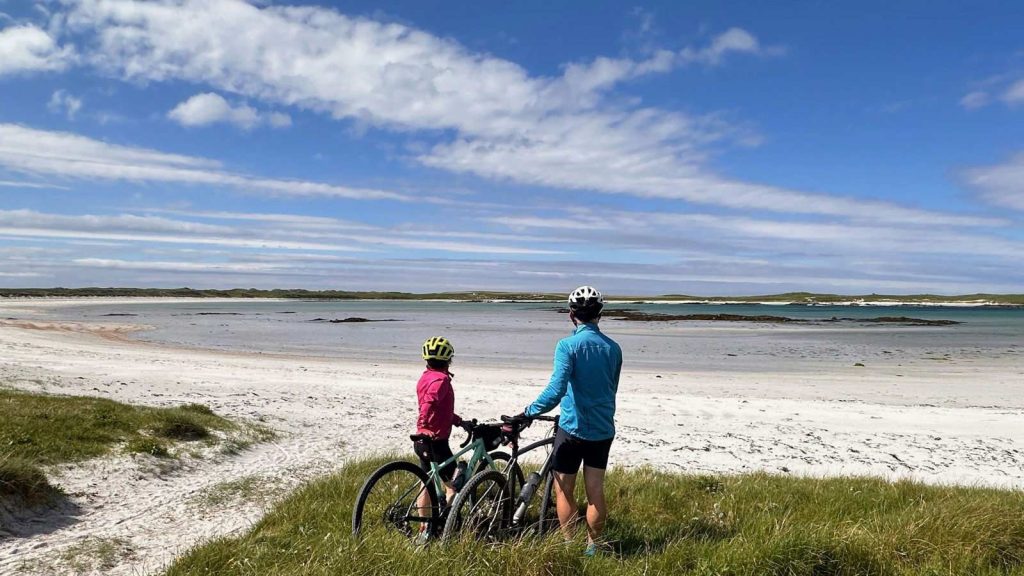
A male and female cyclist in brightly coloured jackets stand on a grassy patch with their bicycles looking out over an expansive white sand beach to the horizon. The sky is blue.

7. You always remember how it made you feel

Long after your bikes are put away and normal life resumes, something more than memories remains. A sensation.

Cycling in Scotland has a way of slowing you down without holding you back. Space, silence, weather, history and landscape all combine to create a feeling of being fully present, fully engaged.

It’s why riders often find themselves thinking back to moments they didn’t photograph or plan for; because the lingering perception of clarity, connection and quiet satisfaction doesn’t just disappear. This deep sense of fulfilment is perhaps the strongest reason of all that people fall in love with cycling in Scotland.

If you feel tempted to fall in love with cycling in Scotland, we offer small-group, fully supported cycling holidays with thoughtfully planned routes, flexible pacing and full van support, as well as bespoke itineraries for individuals, friends, clubs or workplace teams.

And for those who prefer to ride independently, we also provide transfers to and from Scotland’s more remote regions, making even the hardest-to-reach places accessible by bike.

However you choose to ride, we’d love to help you discover why cycling in Scotland stays with people long after the journey ends, so please don’t hesitate to get in touch.

Skinny Tyres logo showing the silhouette of a female cyclist against an abstract background with the words Skinny Tyres in white in the foreground.

Getting dropped

Getting dropped on a bike is every cyclist’s worst nightmare.

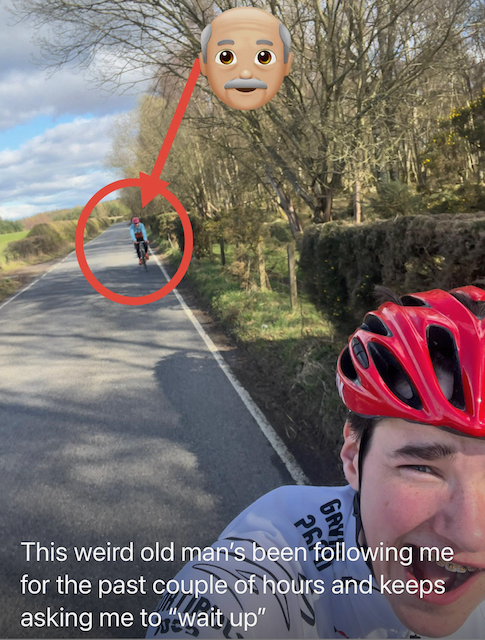
It was bound to happen at one point. Last weekend, on a sunny Sunday ride with my son, I realised today was the day. He was finally faster than me on a bike – and he made sure to rub salt into the wounds he dealt me by sending me a photo of me struggling to keep up.

A middle-aged father getting dropped by his teenage son on a bike ride along a quiet country road in Scotland. The son has taken a selfie showing his dad struggling along behind him. The son is laughing.
When your son rubs salt in your wounds.

Getting dropped is one of those things that cyclists have nightmares about. The phrase is not, as it might suggest, a barely disguised euphemism for falling off or crashing your bike. Instead, it is suffering the ignominy of being unable to keep up with your fellow riders, thus hinting at a lack of fitness and / or riding ability compared to your fellow riders. There are varying degrees of getting dropped, each with its level of self-directed shame and embarrassment attached.

The elastic snaps

Whatever the situation, most riders will experience the ‘snapping of the elastic’, that moment when they have no energy left to pedal, and they finally drop off the back of the group ride. The fact that there are so many idioms and synonyms for the phenomena suggests that it is an all too common occurrence among cyclists. Perhaps one of the problems is that, as a friend once told me, “If you have two cyclists riding together, then you will likely have a race”, as they egg each other on and the pace slowly creeps up until one rider can’t hold on any longer.

It is never as simple as just not being able to keep up.

The analogy of elastic snapping paints the picture perfectly. A dropped rider will go through many stretches and contractions of the ‘elastic’ before it finally goes. It might be a hill that initially sees them losing ground to their fellow riders. They get to the top and fight back to gain lost ground, and a few minutes respite behind the wheel in front of them, before the next rise appears.

The timescale will vary tremendously from rider to rider, but eventually, there will be one gradient too many and the effort of chasing to get back to the riders in front will be too much and ping, the elastic pops and the ignominy of getting dropped occurs.

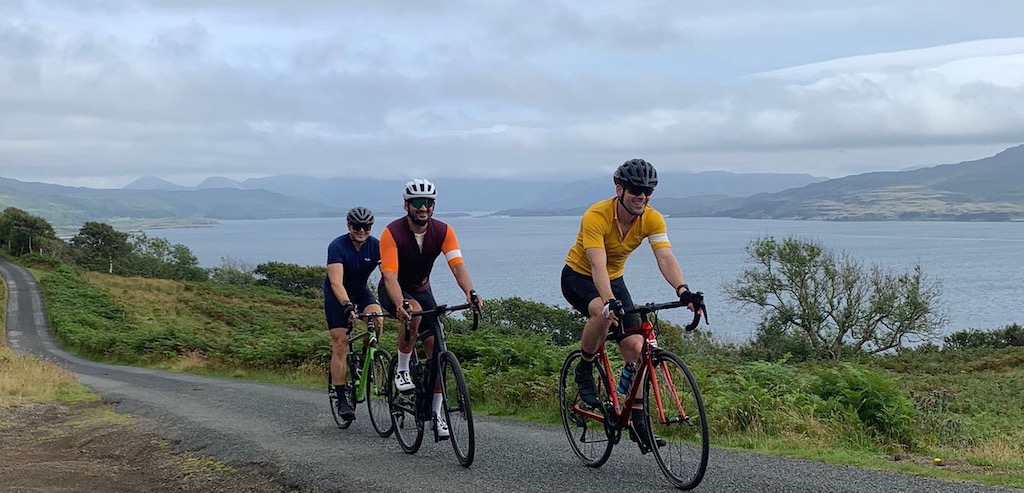
Three friends on road bikes cycle up a single track coastal road. The sea and mountains can be seen behind them. The sky is cloudy.
Cycling friends, as long as they all take their turn at the front.

One hill too many

The benefit of a rest, sitting at the back of a group, can never be underestimated. The sanctuary from the wind offered behind even just one rider can be enough to allow recuperation and may be the difference between hanging on for one more hill, or a lonesome ride home.

There are problems of sitting at the back of a group too (not just getting called out for being a wheel-sucker if you stay there too long). Depending on the pace of a group it can also be a very tiring place to be. On a straight and flat road there aren’t too many problems, but throw in a few corners and suddenly, the back of a group becomes a hanging-on-by-your-finger-nails place to be.

I remember one of my first ever road races, many years ago. It was a high-speed, mid-week event around Tullybaccart and Lundie at the back of Dundee. In the middle of group, I was doing fine, but I slowly found myself jostling for and losing position, and finding myself at the back of the group.

My error became apparent as we started to hit junctions and corners. At the front the speed going round a corner dipped only a few miles an hour, but at the back an accordion-effect was taking place and the speed would drop from 25 mph to 13 mph as the riders braked and bunched up from riding so closely together, then would shoot dramatically back up to 25 mph again.

By the time I had realised my mistake I had no energy left from the constant pace changes to get back into the middle of the bunch. Sprint, brake, accelerate, repeat was the order of the day, and it wasn’t long before my lack of experience and ability became apparent, the elastic snapped, and I found myself making my lonesome way back to the race HQ. 

It can happen and has happened to the best of us, spurring us into a self-flagellating regime of more training and promises that it will never happen again. But then, even that sometimes isn’t enough to avoid being dropped. A lot of it depends on how you are feeling that day, who you are riding with and the terrain you are riding on. Jens Voigt, the colourful German ex-pro rider with a droll sense of humour, had written on the top-tube of his bike when he broke the World Hour Record way back in 2014, “I go so fast I even lap myself”.

Now that would be a tough wheel to hang on to.

Scot Tares

Skinny Tyres logo showing the silhouette of a female cyclist against an abstract background with the words Skinny Tyres in white in the foreground.

Bicycle race, bicycle race 🎵

Ready, steady, go

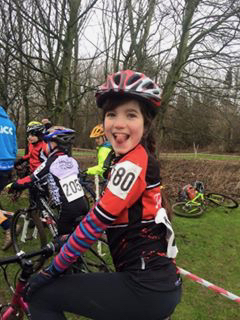
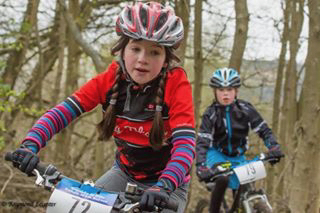
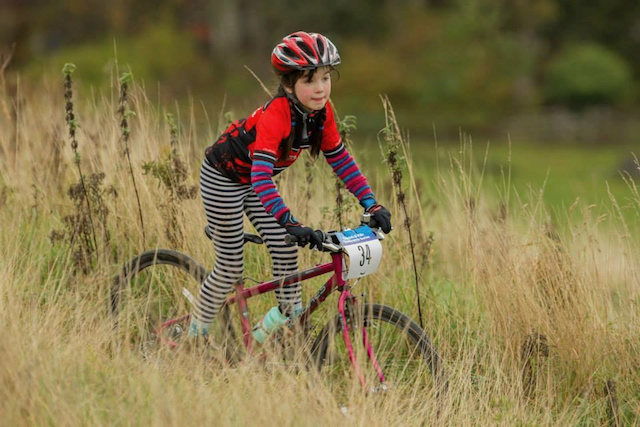
A young girl lines up at the start of a cross country bicycle race. She is poking her tongue out cheekily at the photographer. In the background are other children getting ready to race.

The two riders lined up at the start line of the bicycle race; one at the left of the grid and the other at the right. Between them and behind them other riders crowded, jostling for position, all ready with their race-faces on, but this race was going to be about the rider in the black and the rider in the yellow.

The commissaire shouted “Go!” and the mass of riders sprinted to get into the first corner, which was wide enough for only two riders side by side. The rider in black reached the corner first, closely followed by a rider in yellow and then the rider in red. They disappeared into the trees and onto the narrow, winding single-track course.

The battle

When they re-appeared a few minutes later, the rider in red had passed the rider in yellow, but the rider in black now had a lead of around 15 seconds. It seemed too much for the rider in red to make up and it looked like the bicycle race had been lost in the first lap.

They disappeared into the trees again and the next time they reappeared the rider in red was a few seconds closer but had been snarled up behind some riders that had been lapped. On lap three the rider in black re-appeared with the rider in red only a few seconds behind. The rider in black looked tired and the rider in red looked hungry. It became apparent later that both riders had been in a battle royal in the trees, passing and then being passed and then passing each other again, only to reappear in the same position as before.

The sprint

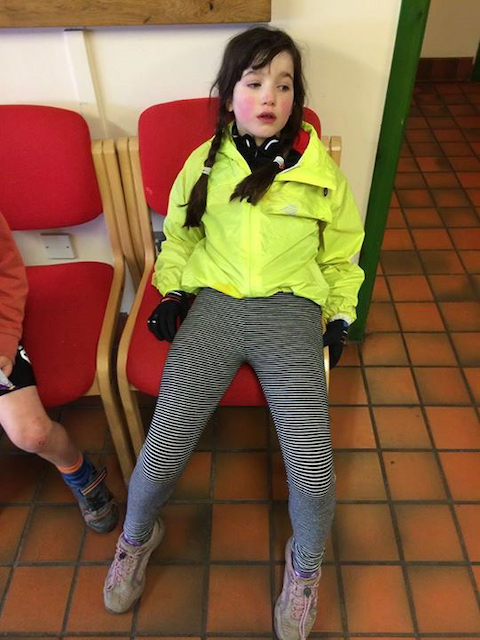
The last lap was going to decide it and as they disappeared into the trees again the crowd held their breath. Emerging from the trees for the last time the rider in red was stuck behind three lapped riders, only just managing to pass them before entering the final corner. Now she was right on the tail of the rider in black and triumph in sight. She screamed from the depths of her soul and accelerated around the corner and the rider in black. Ahead was the finish line and victory. The rider in red sprinted with everything she had, crossing the line collapsing over the bars of her bike and struggling to catch her breath. She had won. 

A young girl wearing a high viz jacket and stripy leggings leans back on a chair, exhausted, after winning a cross country bicycle race.

The over-zealous parent

I have always said I would never be a parent who got over-excited at my children’s sporting achievements, but it was my daughter in the red of the Tay Titans Cycling Club who sprinted for victory. I couldn’t contain myself. I yelled her name louder than I think I have ever yelled and I am sure I was the subject of several raised eyebrows from other parents, but I didn’t care. I was the proudest Dad on Earth.

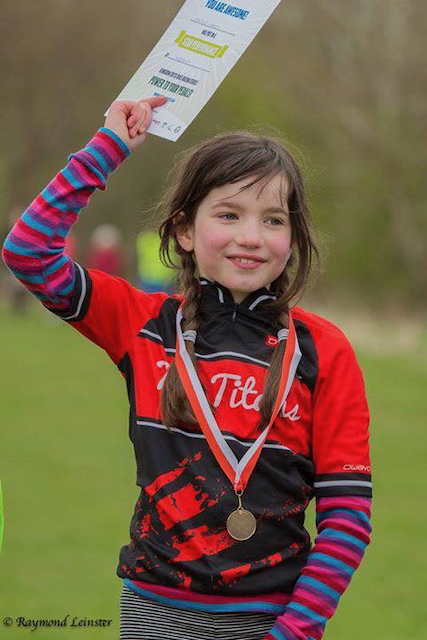
It was only a regional, under-10s mountain bicycle race, but I knew what it meant to her. She had raced since the age of five and only been on the podium twice before, but had spoken of one day winning a race. Today was her day and as far as I was concerned, if she never raced again, the memory of her huge smile on the podium would be enough.

The proud dad

Many years later my daughter still talks of that bike race. Reflecting on that race today, I know it was not the winning that made me the proudest. It was the fact my daughter had pushed herself to her limit and then dug a little bit deeper. I had never seen her empty the tank so completely. It is amazing what we can do with enough determination and looking at my daughter now I can see that strength of character still stands her in good stead today, and not just in sport.

I am a passionate advocate for getting young people active and involved in sports and physical activity. The reasons for this are obvious, but I also believe getting them involved in sports at an early age goes far beyond mere health benefits. It teaches them about respect, determination, commitment and hard work alongside many other valuable traits that will stand them in good stead as they mature into adults.

Both my kids still participate in lots of different sports and, thankfully, they still enjoy the odd bike ride or race on occasion too. As a parent, it is hard not to confuse their choices with my excitement at getting them involved in bikes. Over the years I have taken the view of not pushing, but providing the opportunities and helping out when needed, but letting them follow their paths.

Want to find out how to get young people involved in bicycle races?

There are lots of cycling clubs that welcome young people. Find out more here.

Skinny Tyres logo showing the silhouette of a female cyclist against an abstract background with the words Skinny Tyres in white in the foreground.

Adventure for your soul

Winter cycling adventures are a tonic for your mind and soul

As a kid growing up in the 1970s and 80s, I always felt different to my peers. Perhaps they all felt the same, but no one was brave enough to admit it. So everyone just went with the flow. We played football in the park, went shopping with our parents at the weekend, then watched ‘The Dukes of Hazzard’ on TV. Not that there was anything wrong with any of this. My friends and I played outside whenever we could. We built dens and climbed trees, but I knew there was more adventure out there, I just didn’t know how to access it.

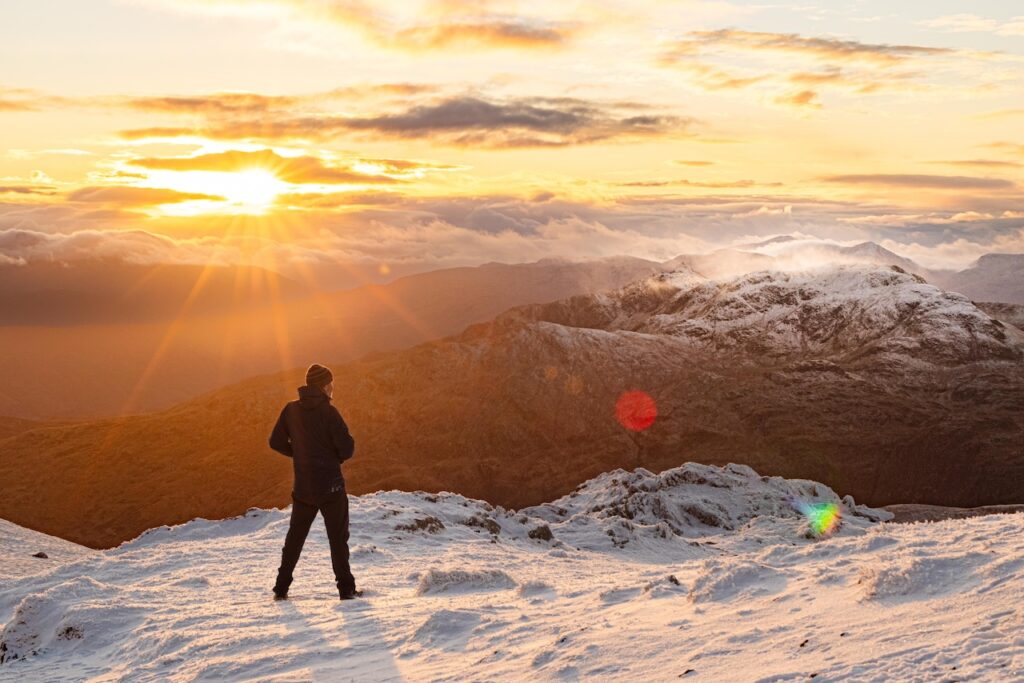
Scot Tares of Skinny Tyres standing on the summit of a snow capped mountain looking out over Rannoch moor as the sun rises.
Looking out over Rannoch Moor at sunrise earlier this year Photo ©T Tares

A world of new adventures opens before me

It wasn’t until I participated in the Duke of Edinburgh Award (DofE) that things became clearer. Instantly, I could see a different path ahead of me. To this day, everything I did as part of that award has had a major impact on my life. From the 18-year career in social care that I started whilst volunteering on the award scheme, to the career I have now in cycling as I joined my first cycling club as part of the DofE award. Through participation in the award, I gained skills and the confidence to push beyond my lack of self-assuredness and crippling shyness and try new activities.

One of the key aspects was the independence I gained. I discovered sports such as hill-walking and cycling that I could enjoy without having to be part of a team. I could just head off into the hills with my thoughts. I found I had abilities that my peers lacked, such as navigating with a map and compass. I went from being the person no one wanted on a team to being the one that everyone wanted in their Cairngorm hiking expedition group.

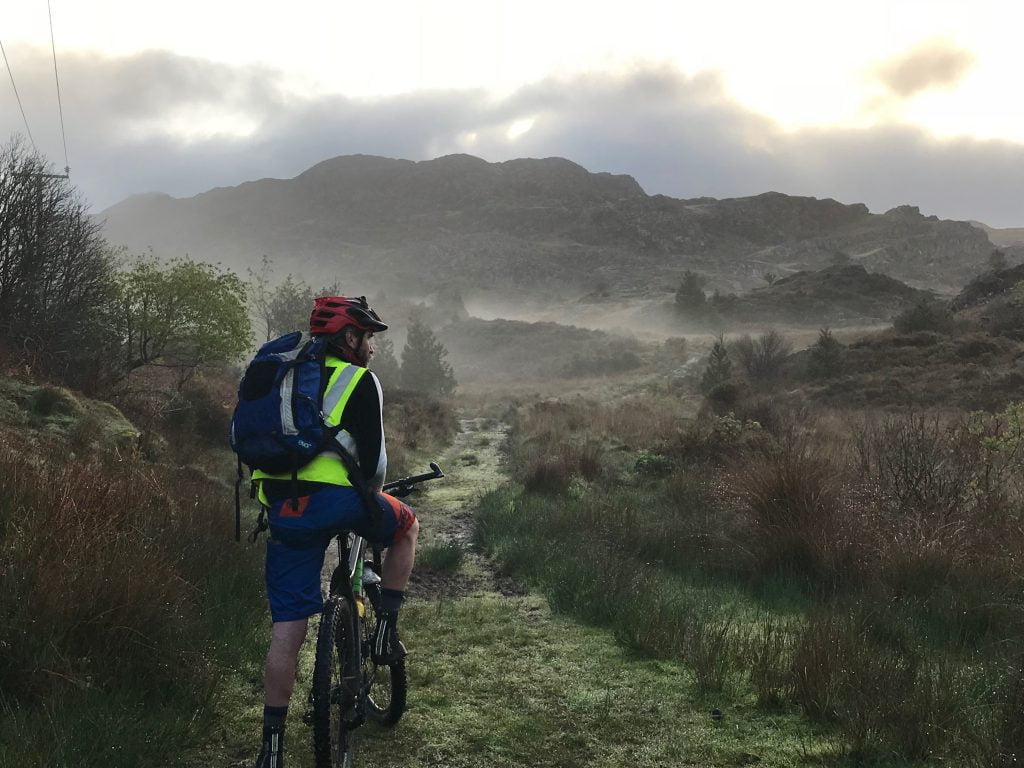
Scot Tares of Skinny Tyres takes a breather on one of his cycling adventures to admire beautiful scenery as he rides a mountain bike across a grassy, shrubby area towards a rocky hill. The grass is clearly wet and the early morning mist can be seen in the background.
Taking time out of route marking an event course in Wales to enjoy the silence

Everywhere you go, you always take the weather with you

Cycling adventures and heading out for walks into forests and up hills still gives me this sense of freedom and release from the world around us. Increasingly, technology, pressures from work, family commitments, and day-to-day life can become big grinds on our mental and physical health. The opportunity to escape all of that, even if only for an hour pays huge dividends.

I have other motivations to ride my bike, such as fitness and work, but taking time to cycle just for myself is a tonic for my soul. It doesn’t even really matter what the weather is like. When the sun shines, it is nice to feel its warmth on my face but, equally, I have pedalled through dark and dingy forests where the mist has hung heavily in the air and I have felt just as uplifted.

I don’t think I am alone in this feeling. Of course, many of you will read this and recognise the same feelings, but I believe many would not identify, or even welcome a cycle ride out in the rain and mud, or inclement weather.

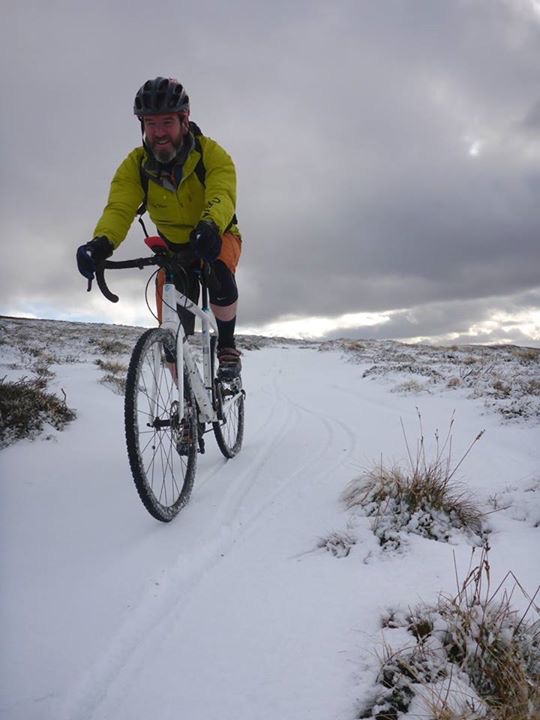
A bearded man wearing a warm yellow jacket and a broad smile cycles cross country through the snow on a Trek Crockett gravel bike.
Riding through the southern Cairngorms

Longing for solitude

I don’t want to philosophise too much here, but I believe we are heading so far from our basic instincts that our health is suffering. We are constantly surrounded by artificial stimulation. Many of us live, work, and play in large towns and cities and never get opportunities to be on our own, away from everything with just nature around us.

I know when I have been in situations like that I get increasingly stressed and angry and long for the isolation and solitude of a mountain or a forest. The song by Crowded House, ‘Everywhere you go, you always take the weather with you’, I believe is about life being what you make of it. If you are continuously surrounded by noise and stimulation then your life is going to head in a similar trajectory.

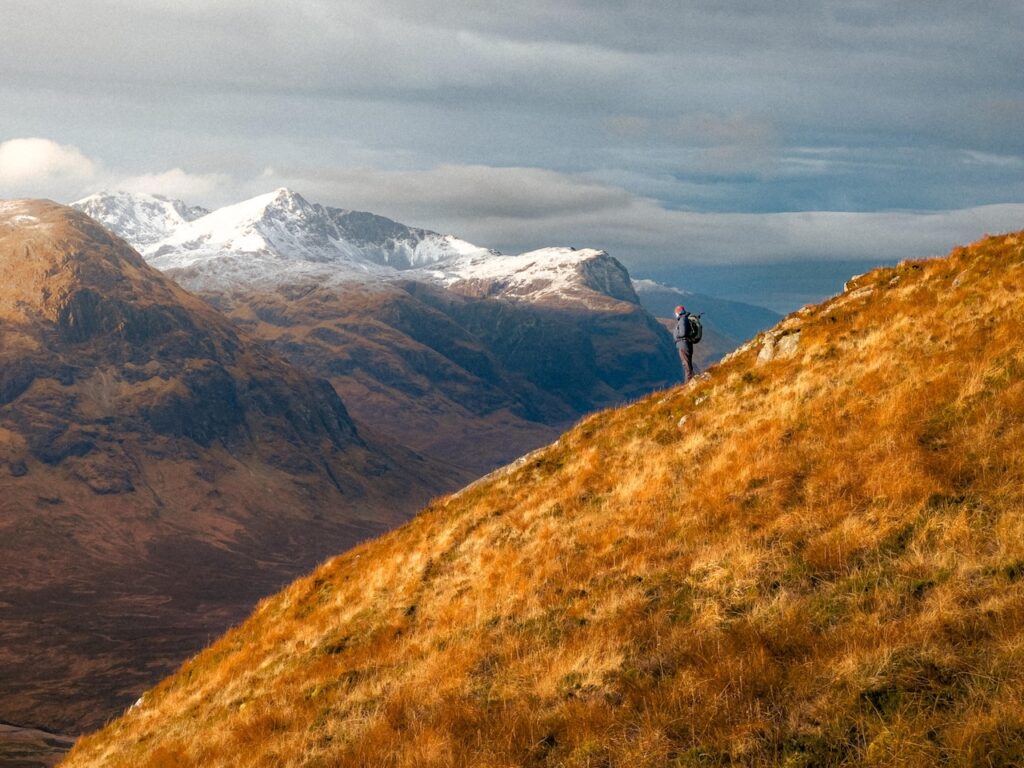
Scot Tares in hiking gear with a small backpack stands on a golden-brown grassy hillside looking out towards snowcapped peaks in Glencoe. The sky is moody.
Finding solitude in the mountains, looking towards the high summits in Glencoe Photo ©T Tares

The physical benefits of exercise are well documented and knowledge about improving mental health and happiness is increasingly linked with being out in the natural world. We tend to fret a lot about our physical health, but perhaps it is our mental health that should come first. Rather than heading to the gym for a spin on a static bike, take a cycling adventure into a muddy forest, or mountain trail instead.

Trust me, you will not regret it.

Skinny Tyres logo showing the silhouette of a female cyclist against an abstract background with the words Skinny Tyres in white in the foreground.

The importance of equality, diversity and inclusion

A year in 20 photographs 6/20 – the Hebridean Way

Wouldn’t life be boring if we were all the same? 

It’s a phrase that is often rolled out, but do we believe it?

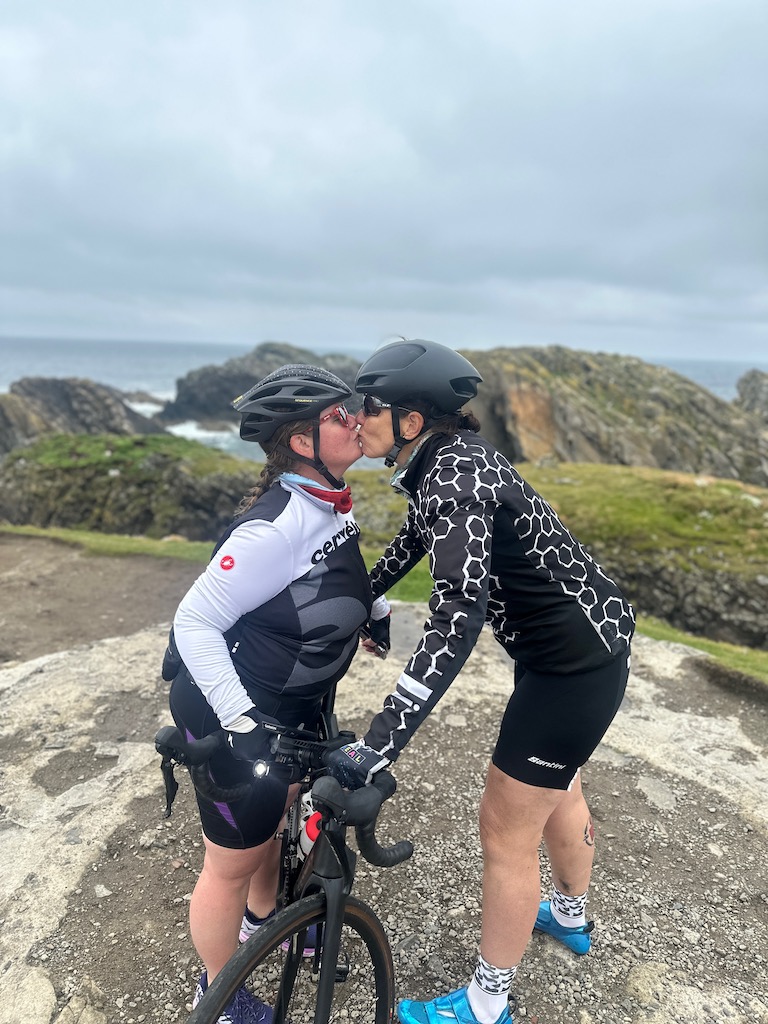
I love this photo. Cycling is an activity that is best shared. It is even better when we share it with those that we love. This couple had just arrived at the Butt of Lewis Lighthouse after cycling the Hebridean Way.

An LGBTQ female couple on a Skinny Tyres cycling holiday in Scotland kiss at the Butt of Lewis, congratulating each other for reaching the end of their Hebridean Way trip. Skinny Tyres recognises the importance of equality, diversity and inclusion.

Equality, diversity and inclusion in cycling

Equality, diversity, and inclusion is not about taking rights away from the majority to favour the minority. It is about treating and protecting people the same way you would expect to be treated and protected yourself.


Fitting in

Growing up, I was incredibly shy and introverted. Looking around I could see everyone else having fun and seemingly getting on with their lives without any hang-ups. This pushed me further into my own world, one where I didn’t feel different from everyone else.

Everything I did seemed to contradict what was the norm for my peers. I hated team sports, but loved going out cycling for hours on end; I listened to music that my friends thought was weird; I dressed differently; I loved horror movies; I wanted to draw comic books; I preferred spending time with my dog than with other people. Trying my hardest to fit in felt completely awkward and pretending that this was my life was exhausting.

I also felt a very keen sense of justice. It pervades everything I do, from what I eat to who I consider friends. A lot of that comes from my own experiences: growing up with an older brother with cerebral palsy and being friends with lots of his friends I saw first-hand how discrimination has a hugely negative impact on every part of people’s lives.

During my secondary years at school I started to come out of my shell. I fell in with others who were like me: long hair, piercings, painted nails, exceptional taste in music, and so on. It was clear that our differences were not the norm and people even told me that I would grow out of this phase (40 years on and I’m still waiting). Society’s expectations meant I was met with varying degrees of dismay: from mild amusement to fear and, on a couple of occasions, I even ended up in the hospital due to violence directed at me. 

Skinny Tyres is inclusive and welcomes everyone

Fast-forward a few decades. When I set up Skinny Tyres I was keen to make it inclusive and welcoming for everyone. A safe place where you indulge in your passion for cycling, no matter what your background is. 

I wanted to do that, not because it was the right thing to do, nor from any sense of what the media tend to label as woke. I did it because I have a belief, deep in my core, that everyone is different and everyone has a right to be who they want to be, to live their life in any way they want as long as that is not harming anyone else. 

It is startling that in 2024 many other people don’t hold this value. Unfortunately, because of this people still need to consider everyday choices, such as where they go out at night, or what they wear. Fear of discrimination, and often abuse directed at them, is a constant companion because of their gender, ethnicity, sexuality, and life choices.

A friend once told me that they always take time to consider who they are booking a group holiday with. Not for practical reasons such as cost, destination, or such. They want to ensure that who they are booking with will be open and friendly to a same-sex, married couple. They have had so many negative and intimidating experiences that it has now become part of their decision-making process in everything they do together.

Skinny Tyres is proud to be an LGBTQ-friendly business, providing a safe and warm welcome to everyone on our cycling tours in Scotland. Join us on the Hebridean Way for your next cycling tour.

If you would like to find out more about us, please get in touch.

Skinny Tyres logo showing the silhouette of a female cyclist against an abstract background with the words Skinny Tyres in white in the foreground.

A year in 20 photographs

A year in 20 photographs 1/20 – cyclists at Calgary Bay on the Hebridean cycling tour

Two happy female cyclists sitting on the beach at Calgary Bay on the Isle of Mull after paddling in the sea. One of them is wiping sand off her feet. There is a bicycle lying on the ground behind her.

2024 has been a fantastic year for cycling in Scotland. We want to celebrate with some of our favourite images of guiding cyclists around Scotland and beyond. Each day between now and end of the year we will share one of our favourite pictures from our cycling adventures.

2024 was the first year we ran this Hebridean cycling tour and it quickly became one of our favourites. The Hebridean Island Hopper takes us to the Outer Hebrides, Skye, Mull and the rugged west coast of Scotland. This trip took us through some stunning scenery with spectacular views and places to visit along the way.

I took this photo just after the riders had been paddling on the beach Calgary Bay. We believe that cycling is one of the best ways to see a landscape as you can cover a lot of ground, but at a pace that allows you to savour the scenery around you. Since we make a point of stopping at many of the beautiful locations on our routes, you can enjoy what the area has to offer. From beautiful beaches to amazing mountain scenery, it is all there to explore.

Find out more about our Hebridean Island Hopper tour.

A female cyclist stands in the Atlantic Ocean looking out to see at Calgary Bay on the Isle of Mull during a Skinny Tyres Hebridean cycling tour. Small waves are crashing around her ankles.

Find out more about Calgary Bay and the Isle of Mull.

Skinny Tyres logo showing the silhouette of a female cyclist against an abstract background with the words Skinny Tyres in white in the foreground.

Subscribe

Skinny Tyres News