Cycling Scotland’s Snow Roads in pursuit of trivia

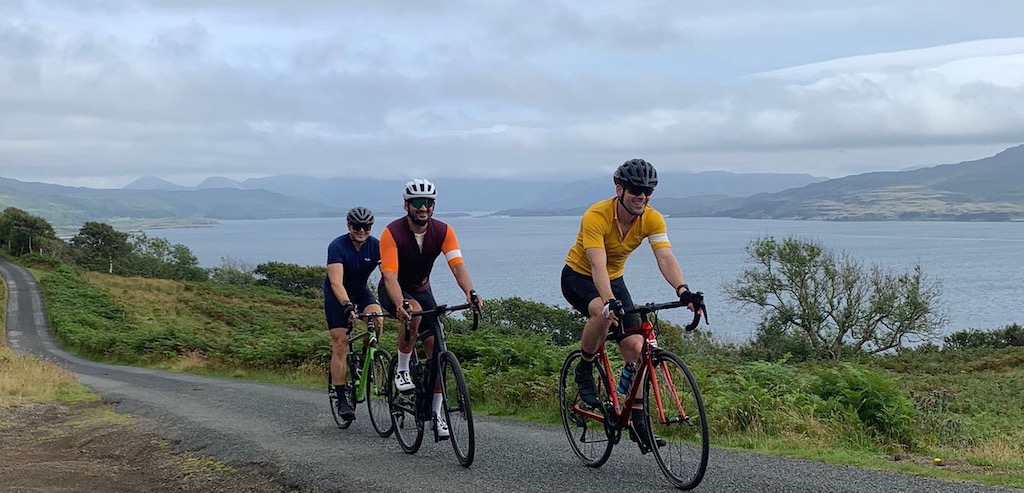
On our cycling tour of Scotland’s Snow Roads you scale three of the highest public roads in the UK, so whilst nothing about the riding could be accused of being trivial, the route itself could be a journey through The Encyclopedia Caledonia, where every pedal stroke uncovers a new category of Scottish trivia.
So, because we delight in sharing Scotland’s stories as much as its scenery and cycling, we thought we’d serve up a selection of fun facts for you to digest along the way.

Cycling Scotland’s Snow Roads: geography
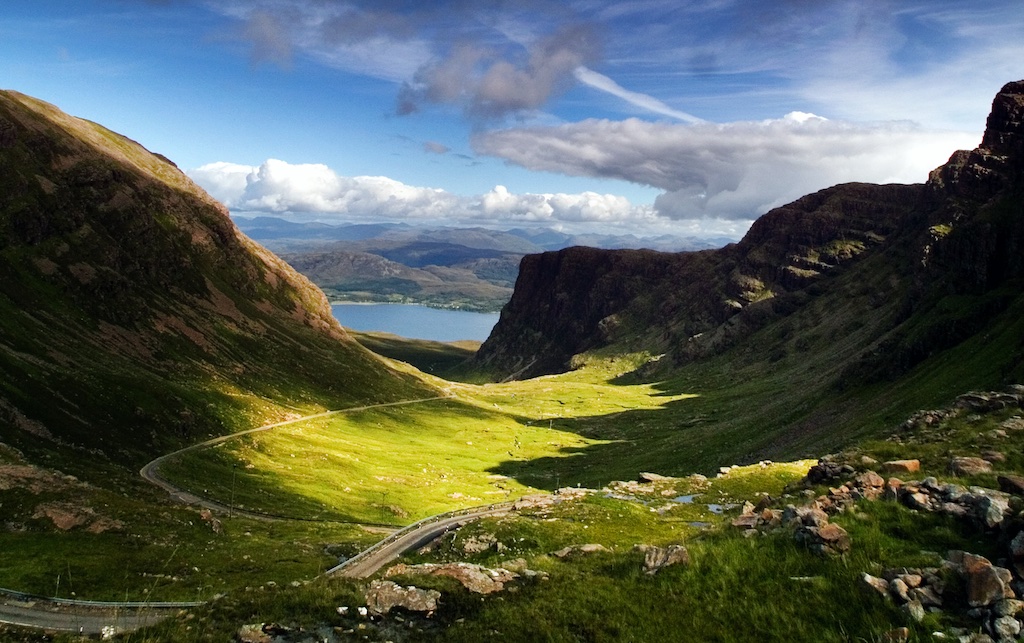
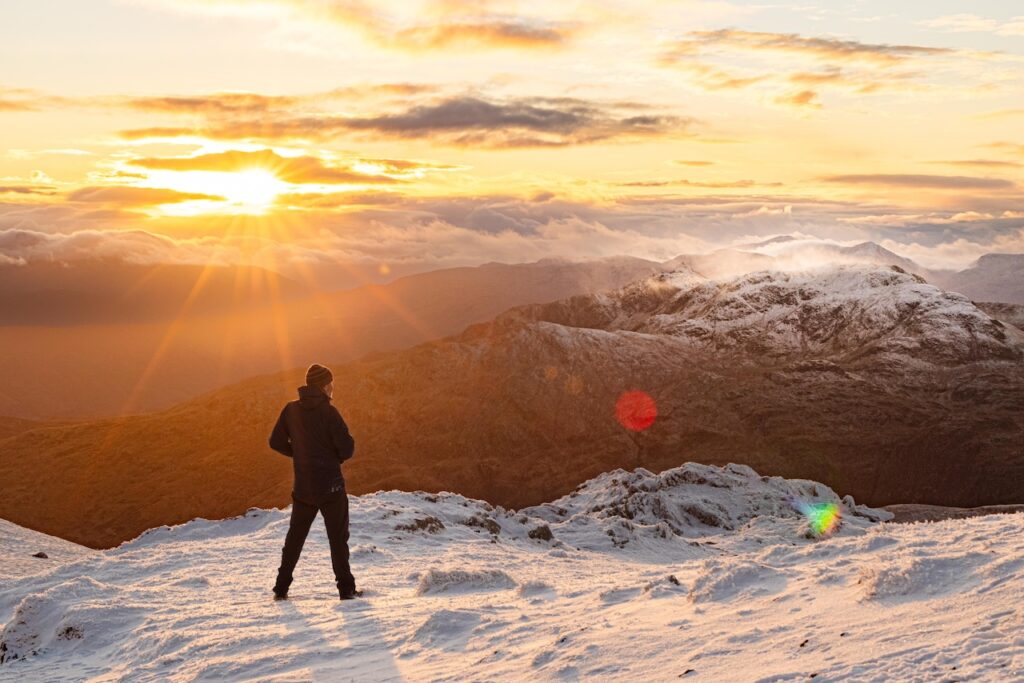
Most of the pedalling on our Snow Roads cycling holiday happens in or on the fringes of the Cairngorms National Park.
Covering 4528 sq km, this is the UK’s largest national park. It boasts the largest area of high-level tundra-like plateau in Britain with a unique sub-Arctic ecosystem more similar to environments found in Scandinavia than the UK.
Characterized by dramatic granite outcrops or tors, and vast ancient Caledonian forests that date back to the last ice age, it is home to five of the six highest mountains in the UK.
Nearly half of the park is classified as wild land featuring vast, rugged terrain with few signs of human impact, making it perfect terrain for cyclists seeking solitude and untouched beauty.

Cycling Scotland’s Snow Roads: history
On 8 September 2022, at the age of 96, Queen Elizabeth II passed away peacefully at Balmoral Castle.
She was the first British monarch to die at Balmoral and her deep connection to it echoed that of her great-great-grandparents, Queen Victoria and Prince Albert, who purchased the estate on the River Dee in 1852. The castle was built as a summer residence the following year. So, the area once known as Deeside acquired a prefix and became Royal Deeside.
Queen Victoria’s constant love for the region popularised the name and it has been in common usage ever since.
A large part of Royal Deeside lies within the Cairngorms National Park. As you ride through the heart of it past Balmoral Castle to Ballater, it’s easy to see why it has captivated generations of royals and visitors alike.
The beautiful village of Ballater, nestled in a crook of the River Dee, boasts local businesses aplenty proudly displaying Royal Warrants above their doors, indicating that they are suppliers to the royal household.

Cycling Scotland’s Snow Roads: art and literature
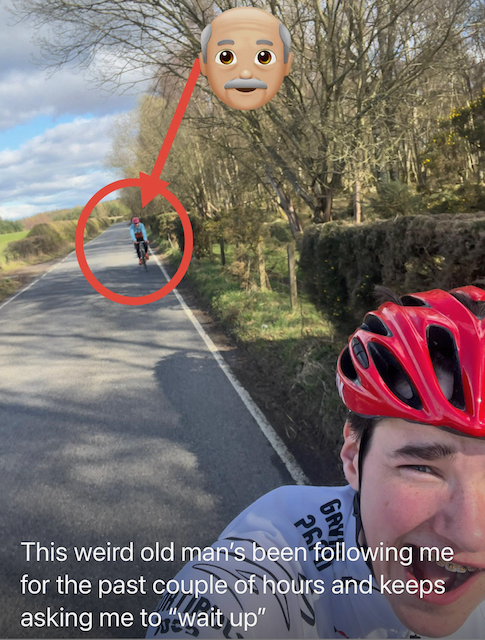
The Old Man of Lochnagar is a children’s book written in 1980 by the then Prince of Wales (now King Charles III) and sold in aid of The Prince’s Trust.
The story is about an energetic and carefree old man who lives in a cave by the loch under Lochnagar* mountain. He roams the countryside interacting with the birds and fish, and other secret local inhabitants. The book is a fantastical celebration of the natural world, clearly inspired by the landscape of the Balmoral estate which is overlooked by Lochnagar.
*Lochnagar is a Munro, a Scottish mountain over 3000 feet (914 m). Bagging a Munro means reaching its summit.
Lochnagar’s Gaelic name, Beinn Chìochan, translates as breast-shaped mountain.

by string_bass_dave
Cycling Scotland’s Snow Roads: sport and leisure
Royal Lochnagar is also the name of a single malt whisky. While our route doesn’t pass right by the distillery, you do ride through Speyside, Scotland’s most prolific whisky-producing region, home to more than half the country’s distilleries.
Highly regarded Speyside whiskies include The Macallan, Glenfiddich, The Glenlivet, The Balvenie and Aberlour.
When we raise our glasses in Scotland, we don’t say cheers. Instead, we say slàinte mhath (pronounced slan-cha-va) meaning good health.

Cycling Scotland’s Snow Roads: science and nature
Did you know ospreys have a special extra eyelid, a bit like a contact lens, that helps to protect their eyes when they hunt under water?
Or that they have special spines on their feet to help them keep hold of their slippery prey?
What about the fact that they hold a fish facing forwards to limit air resistance and help with flight when taking their catch home for dinner?
Ospreys became extinct in the UK in the early 20th century.
In 1954, Loch Garten Nature Reserve welcomed a successful breeding pair of ospreys. This marked the beginning of a major conservation success story in Scotland. Today, there are an estimated 250–300 breeding pairs.
Whilst spinning your wheels through Speyside you ride past Loch Garten and may well spot an osprey as they are often seen in the Highlands and central Scotland from March to September.

Cycling Scotland’s Snow Roads: entertainment
With the final season of Outlander now out on Netflix nearly 12 years after its first episode aired, we wonder if you even remember Craigh na Dun …
You may not recall the name, but we’re actually pretty sure that you know where we’re talking about – the magical hillside with the standing stones that allow Claire to travel through time.
Whilst Craigh na Dun doesn’t exist in reality, the hillside does. And it’s near Kinloch Rannoch which you cycle through on Day 1 of our Snow Roads holiday.
However, there are no standing stones there as these are also fictional. According to the executive producer of the series, they were carved from Styrofoam. It has been suggested that Diana Gabaldon’s inspiration might have come from the very real Calanais (Callanish) Standing Stones on the Isle of Lewis and which you can visit on our Hebridean Way holiday.
These pub quiz gems are but a few from the multitudes that are woven into the rich tapestry of Scotland’s identity.
If you’d like to travel by bike through more of our legendary past and fascinating present, why not check out our Snow Roads itinerary. Or any of our other cycling holidays – we pursue trivia on two wheels everywhere we go!